
How Do You Safely Wash a Ceramic Coated Car?
Last Updated: November 5, 2026
Quick Summary
To safely wash a ceramic coated car, use a pH-neutral, wax-free soap and a two-bucket wash with grit guards, rinsing your mitt every panel or two. Start with a pre-wash rinse and snow foam dwell of three to five minutes, then dry by sheeting water off and blotting with a plush towel.
- Keep the pressure washer nozzle at least a foot from the surface and use a wide fan pattern.
- Wash in straight lines, not circles, and rinse the mitt every panel or two.
- Let snow foam dwell three to five minutes and never let it dry on the panel.
- Avoid soaps with wax, silicone, or dyes that mask the coating's hydrophobic behavior.
- Use a waterless wash only for light dust, never for heavy mud or road salt.
Table of Contents
- Why a Ceramic Coated Car Needs a Different Wash Routine
- Tools and Equipment You Need Before You Start
- Step-by-Step: The Safe Wash Process
- The Best Soap for a Ceramic Coated Car
- Can You Use a Pressure Washer on Ceramic Coating?
- Waterless Wash for a Ceramic Coated Car: When and How
- Maintaining Ceramic Coating Longevity Between Washes
- Troubleshooting Hydrophobic Loss and Winter Contamination
- Frequently Asked Questions
Why a Ceramic Coated Car Needs a Different Wash Routine
Learning how to safely wash a ceramic coated car starts with one idea: the coating is protection, not armor.
A coated panel still traps grit, and a careless wash grinds it across the surface. The coating helps debris slide off, but friction still leaves marks.
Owners often pay for a quality coating, then wash it like a waxed car and wonder why the shine fades.
The routine differs in three ways:
- Gentler chemicals. Harsh detergents break down the coating over time.
- More lubrication. Slick soap and clean media keep grit off the paint.
- Less contact. Touchless steps remove most dirt before a mitt ever lands.
Get these right and the coating protects the paint; get them wrong and the protective layer can wear away faster. Read our guide on how long nano ceramic coating lasts.
Tools and Equipment You Need Before You Start
Assemble your gear before the first drop of water hits the car. A disorganized wash leads to shortcuts, and shortcuts scratch paint.
Here is the baseline kit:
- Two wash buckets with grit guards
- A pH-neutral car soap
- A plush microfiber wash mitt
Skip the old bath towel. Our edgeless microfiber towels are designed to level and buff after ceramic coating.

One insider tip: wash your mitt and towels before first use. Fresh microfiber can carry loose fibers that soften after a rinse.
Step-by-Step: The Safe Wash Process
The safe wash process moves from least contact to most: remove the bulk of the dirt with water and foam, then touch only what remains. Follow these stages in order to protect the coating at every step.
Pre-Wash and Rinsing Techniques
Start with a thorough rinse to knock off loose dirt, working top to bottom and paying attention to the lower panels where road grime collects.
Next, apply snow foam through a foam cannon.
This pre-wash stage does the heavy lifting: the less dirt left for the contact wash, the lower your risk of swirl marks.
Watch out: rinsing a hot panel in direct sun can flash-dry the water and leave mineral spots before you even reach the wash stage.
The Two-Bucket Wash Method
The two-bucket method keeps dirty water away from clean soap. Fill one bucket with sudsy water and the other with plain rinse water, both with a grit guard at the bottom.
Here is the rhythm:
- Load the mitt with soap from the wash bucket.
- Wash one panel, working top to bottom and in straight lines.
- Rinse the mitt in the rinse bucket and scrape it against the grit guard.
- Reload with fresh soap and move to the next panel.
Wash in straight lines, not circles, and rinse the mitt every panel or two on a dirty car, the single biggest defense against swirl marks.
A common refinement is the three-bucket method: a third bucket holds clean water for the final rinse of the mitt, or a separate bucket is dedicated to wheels and lower panels so wheel grit never enters the paint buckets.
Drying Techniques to Prevent Water Spots
Drying matters as much as washing. Left to air dry, water leaves mineral spots that etch into the coating: as water evaporates, dissolved calcium and magnesium salts concentrate and deposit on the surface.
Use these steps:
- Sheet the water off with a gentle stream from the hose. A slow, low-pressure flow causes the water to sheet rather than bead, leaving less to towel dry.
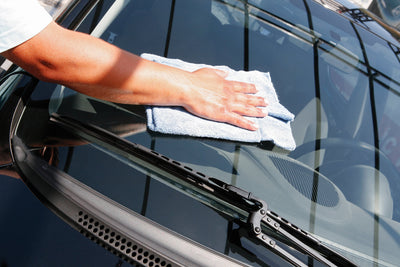
- Blot the remaining water with a plush drying towel. Do not scrub.
- For tight areas, use a drying aid for extra lubrication.
Move quickly, the longer water sits, the harder those spots are to remove. Maintaining the integrity of your finish requires careful selection of cleaning products, a principle that remains equally critical when managing the specific surface requirements of vinyl car wraps.
The safe wash moves from least contact to most, and each stage has its own rules.
| Stage | What to do | Key detail |
|---|---|---|
| Pre-wash rinse | Rinse top to bottom, wide fan pattern | Nozzle at least a foot from surface |
| Snow foam | Apply foam and let it dwell | Dwell three to five minutes; do not let it dry |
| Two-bucket wash | Soap bucket and rinse bucket with grit guards | Rinse mitt every panel or two |
| Wash strokes | Work top to bottom in straight lines | Not circles; resist moving fast |
| Drying | Sheet water off, then blot with plush towel | Do not scrub; use drying aid on tight areas |
| Water spots | pH-neutral soap and fresh microfiber | Avoid acidic products that can dull coating |
The Best Soap for a Ceramic Coated Car
The best soap for a ceramic coated car is a pH-neutral, wax-free formula. It cleans without stripping the coating or leaving a film that dulls the shine. That is the short answer. The longer answer is about chemistry, because "pH-neutral" is a starting point, not a guarantee.
What pH-Neutral Actually Means
A pH-neutral car soap sits near 7 on the scale; most quality maintenance soaps fall in the 6.5 to 7.5 range. pH matters on a coating because strong alkalinity and strong acidity both attack the bond between the coating and the clear coat over repeated use. A high-alkaline strip wash has its place for removing old wax, sealants, and built-up road film, but it is not a weekly maintenance soap for a coated car.
Decon+ Prep & Maintance Foam Wash 16oz. →
A common pattern is to keep two soaps on the shelf: a pH-neutral maintenance soap for routine washes and a higher-alkaline strip or decontamination soap used occasionally when the surface needs a reset. Using the strip soap every wash is how owners prematurely wear down a coating.
Additives to Avoid
Avoid anything with wax, silicone, or dyes. These additives sit on top of the coating and mask its hydrophobic behavior. A wax-laced soap leaves a sacrificial film that beads water on its own, so you cannot tell whether the coating is still working.
Dish soap is designed to cut grease and is not formulated for vehicle surfaces, so it is not a suitable maintenance soap for a coated car.
Dilution and Dosage
Follow the label dilution ratio rather than eyeballing it. Over-concentrated soap leaves residue that attracts dust and can film glass and trim; under-concentrated soap lacks the lubrication that keeps grit off the paint. A common foam-cannon ratio is around 1 ounce of soap to the cannon's reservoir volume, but the correct number is the one on the bottle. For bucket washing, mix to the label's bucket ratio and refresh the bucket if it gets heavily soiled mid-wash.
Hard Water and Soap Performance
If your tap water is hard, soap performance drops: calcium and magnesium bind with surfactants, reducing suds and cleaning power, and leave mineral deposits as the water dries. Two practical fixes: use a soap formulated to tolerate hard water, and add an inline water filter to your hose or pressure washer. A final rinse with filtered or deionized water is the single most effective way to prevent water spots on a coated car, because it removes the minerals before they can deposit.
How We Use Our Maintenance Foam
Our Decon+ prep and maintenance foam wash is a multi-surface foaming wash that works as a prep step before ceramic coating and as a maintenance wash for all surfaces. It is free of wax, silicone, and dyes.

Here is how we use it:
- Add one ounce to a foam gun.
- Apply to small sections and let it stand three to four minutes.
- Rinse with filtered water, then dry.
For heavy contamination, pair it with a dedicated iron remover. The soap handles the everyday grime; the iron remover handles the bonded metal particles.
Can You Use a Pressure Washer on Ceramic Coating?
Yes, you can use a pressure washer on a ceramic coating, but distance and angle matter.
Follow these rules:
- Keep the nozzle at least a foot from the surface.
- Use a wide spray pattern, not a pencil jet.
- Never aim directly at panel gaps, badges, or trim edges.
A pressure washer can remove loose grit with no contact when used at a safe distance and angle, which is useful before the mitt comes out.
Watch out: holding the jet on one spot to blast off a stubborn bug can lift the coating edge.
Waterless Wash for a Ceramic Coated Car: When and How
A waterless wash for a ceramic coated car works well for light dust and fresh fingerprints, not for heavy mud or road salt. The coating's slick surface makes it a good fit, but only when the dirt level is low.
Here is the safe way to do it:
- Work in shade on a cool panel.
- Spray a waterless wash or detail spray generously onto one section.
- Let it dwell for a few seconds to lift dust.
The key is lubrication. Use more product than you think you need, and never scrub dry paint. If the car is caked in grime, skip this method and do a full wash.
Maintaining Ceramic Coating Longevity Between Washes
Maintaining ceramic coating longevity comes down to small habits between full washes. The coating does the hard work, but a few routines keep it performing at its best.
- Use a top-up spray. A ceramic sealant or boost spray refreshes the hydrophobic layer after each wash.
- Remove contaminants early. Bird droppings, tree sap, and bug splatter should come off fast, before they bond.
- Avoid automatic brush washes. The spinning brushes grind grit into the coating.
Our Nano Coat waterproof spray is made for this between-wash upkeep. A light application after drying helps restore the beading effect and keeps the surface slick.

Troubleshooting Hydrophobic Loss and Winter Contamination
When water stops beading, the coating is not necessarily dead. Hydrophobic loss usually means the surface is clogged with contaminants, not that the film has failed.
Try this first:
- Wash with a pH-neutral soap.
- Apply an iron fallout remover to pull out bonded metal particles.
- Use a clay bar or decontamination mitt gently if the surface feels rough.
In winter, road salt and brine are the main culprits. Salt sits on the lower panels and dries into a film that masks the coating.
If beading still will not return after a full decontamination, the coating may be near the end of its service life. Our Hydrophobia synthetic sealant can restore protection in the meantime while you plan the next step.
Frequently Asked Questions
What is the best way to wash a car that has been ceramic coated?
Start with a pH-neutral foam pre-wash to loosen dirt, then rinse with a pressure washer from a safe distance. Use the two-bucket method with a grit guard and a microfiber wash mitt, washing from the roof down. Dry with a plush microfiber towel or a drying aid to prevent water spots. Avoid automatic car washes and any soap containing wax or silicone, which can mask the coating's hydrophobic properties.
Can I use dish soap to wash my ceramic coated car?
No. Dish soap is formulated to strip oils and grease, and it can degrade the ceramic coating over time by breaking down its protective layer. It also leaves the surface without lubrication, increasing the risk of swirl marks. Use a pH-neutral soap designed for coated vehicles, like Liquid Armour's Decon+ Prep and Maintenance Foam Wash, which is free of wax, silicone, and dyes.
How often should I wash a ceramic coated car to maintain the coating?
Wash every two to four weeks under normal driving conditions. In winter or areas with road salt, wash every one to two weeks to prevent salt and brine from sitting on the coating. Regular washing removes surface contaminants before they bond, which is key to maintaining ceramic coating longevity and keeping the hydrophobic layer active.
Is it safe to take a ceramic coated car through an automatic car wash?
Avoid automatic car washes with brushes or harsh chemicals. Brush washes can inflict swirl marks and micro-scratches that dull the coating's gloss. Touchless washes are safer but often use strong alkaline detergents that can degrade the coating over time. Hand washing with pH-neutral soap and proper technique remains the safest way to clean a ceramic coated car.
Washing a coated car the right way takes a little more care, but the payoff is a finish that stays slick and glossy far longer. At Liquid Armour USA, we build nano-ceramic coatings with 9H+ hardness and a hydrophobic self-cleaning effect, so the wash routine you just read protects an investment that keeps its shine. Our SGS-tested coatings are backed by a professional installer network. Get started with Liquid Armour USA and keep your coating performing at its peak.