
7 Benefits of Titanium Coatings for Home Surfaces
Last Updated: November 16, 2026
Quick Summary
Titanium coatings are thin protective layers that bond titanium-derived compounds to a surface, creating a harder, more stain-resistant finish than the material underneath. Titanium-infused SiO2 hybrid coatings can be rated for 7+ years when two or more coats are applied to a properly prepared surface.
- Titanium cookware and titanium nitride are different products from liquid-applied titanium coatings for household surfaces.
- The LA Ti Titanium SiO2 Coating has a 94% solids formula and builds roughly 5 microns per coat.
- Premature coating failures are commonly linked to prep problems like oils and soap residue blocking adhesion.
- Titanium-infused coatings exceed 9H hardness and resist hard water and cleaners better than standard ceramic.
- A $199.99 bottle of LA Ti covers a substantial area, keeping per-month cost below repeated sealant purchases.
Table of Contents
- What Titanium Coatings Actually Are (and What They Are Not)
- Titanium Coating Durability: How Long Protection Lasts on Household Surfaces
- Titanium vs Ceramic Coating: Which Holds Up Better at Home
- Hardness, Corrosion Resistance, and Wear Protection on High-Traffic Surfaces
- Titanium Coating Safety for Kitchen Surfaces and Food-Contact Areas
- Titanium Coating Maintenance: Cleaning, Reapplication, and Lifecycle Cost
- Choosing the Right Titanium Coating for Your Home Surfaces
- Frequently Asked Questions
What Titanium Coatings Actually Are (and What They Are Not)
Titanium coatings are thin protective layers that bond titanium-derived compounds to a surface, creating a harder, more stain-resistant finish than the material underneath. Titanium-infused SiO2 hybrid coatings are built for exactly this purpose, and the benefits of titanium coatings for home surfaces start with that simple idea: a sacrificial shield that takes the abuse so your countertop, tile, or fixture does not.
Here is where most guides go wrong. They treat every "titanium" product as the same thing. It is not.
Titanium Coatings vs Titanium Cookware vs Titanium Nitride
Three products share the word and almost nothing else.
- Titanium cookware is a metal pan, often titanium-clad or titanium-reinforced. The titanium is the body, not a coating.
- Titanium nitride is a hard ceramic film applied in vacuum chambers to drill bits, watch cases, and some pans. It is gold-colored, extremely hard, and not something you wipe on at home.
- Titanium coatings for household surfaces are liquid-applied films, usually titanium particles suspended in a silica carrier, that cure into a hydrophobic layer.
That distinction matters because durability, safety, and cost claims only transfer within the right category. A titanium nitride drill bit tells you nothing about a bathroom tile sealer.
Titanium Coating Durability: How Long Protection Lasts on Household Surfaces
Durability is not a single number. It is the product of four variables: solids content, film build per coat, substrate preparation, and post-application cure. Change any one and the service life moves. That is why a one-coat wipe-on on a busy kitchen island will not match a two-coat application on a low-traffic bathroom wall, even with the same bottle.
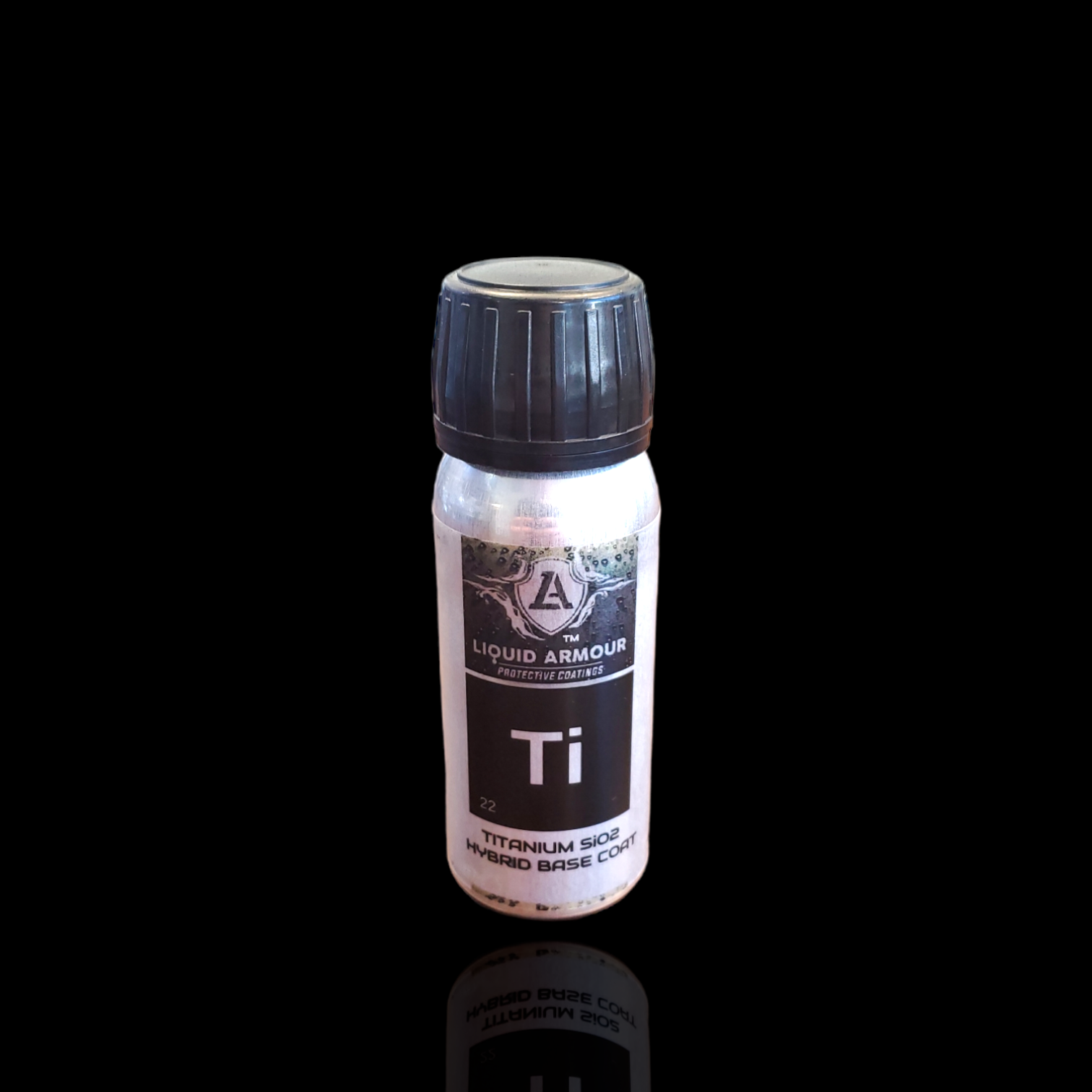
The LA Ti Titanium SiO2 Coating carries a 94% solids formula and builds roughly 5 microns per coat. When two or more coats go down on a properly prepared surface, it is rated for 7+ years. Realistic expectations for a home:
What Actually Drives Coating Failure
Premature failures are commonly linked to prep problems rather than the product itself. Oils, soap residue, and polish left on the surface block adhesion, and the coating lifts within months. The mechanism is straightforward: a titanium-infused SiO2 film bonds to the substrate through chemical and mechanical adhesion, and any contaminant layer between the two becomes the weak point. Once water finds that layer, it migrates under the film and lifts it.
The second driver is film build. A single thin coat leaves high points on a textured surface unprotected. Two coats build enough thickness to cover the profile of most countertop and tile finishes, which is why the 7+ year rating assumes two or more coats.
The third is cure. A titanium coating cures by solvent evaporation followed by cross-linking. Full cure typically takes several days, and during that window the film is softer and more vulnerable to water and abrasion.
Real-World Limitations and Care Instructions
A balanced view matters more than a sales pitch. Titanium coatings resist wear, but they are not armor. Abrasive cleaners, scouring pads, and acidic products break down the film faster than mild soap and water. Dropped knives and heavy impact can gouge the coating and the surface beneath it. Once the film is damaged in a spot, water can work under the edges, so touching up a damaged area early is cheaper than recoating the whole surface later.
Avoid high-alkaline cleaners, including some degreasers and oven cleaners, as they can dull a titanium-infused film.
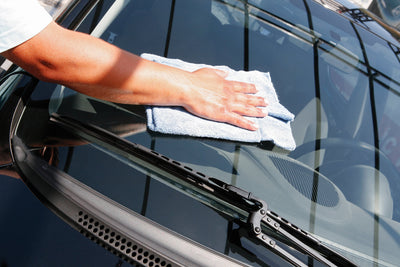
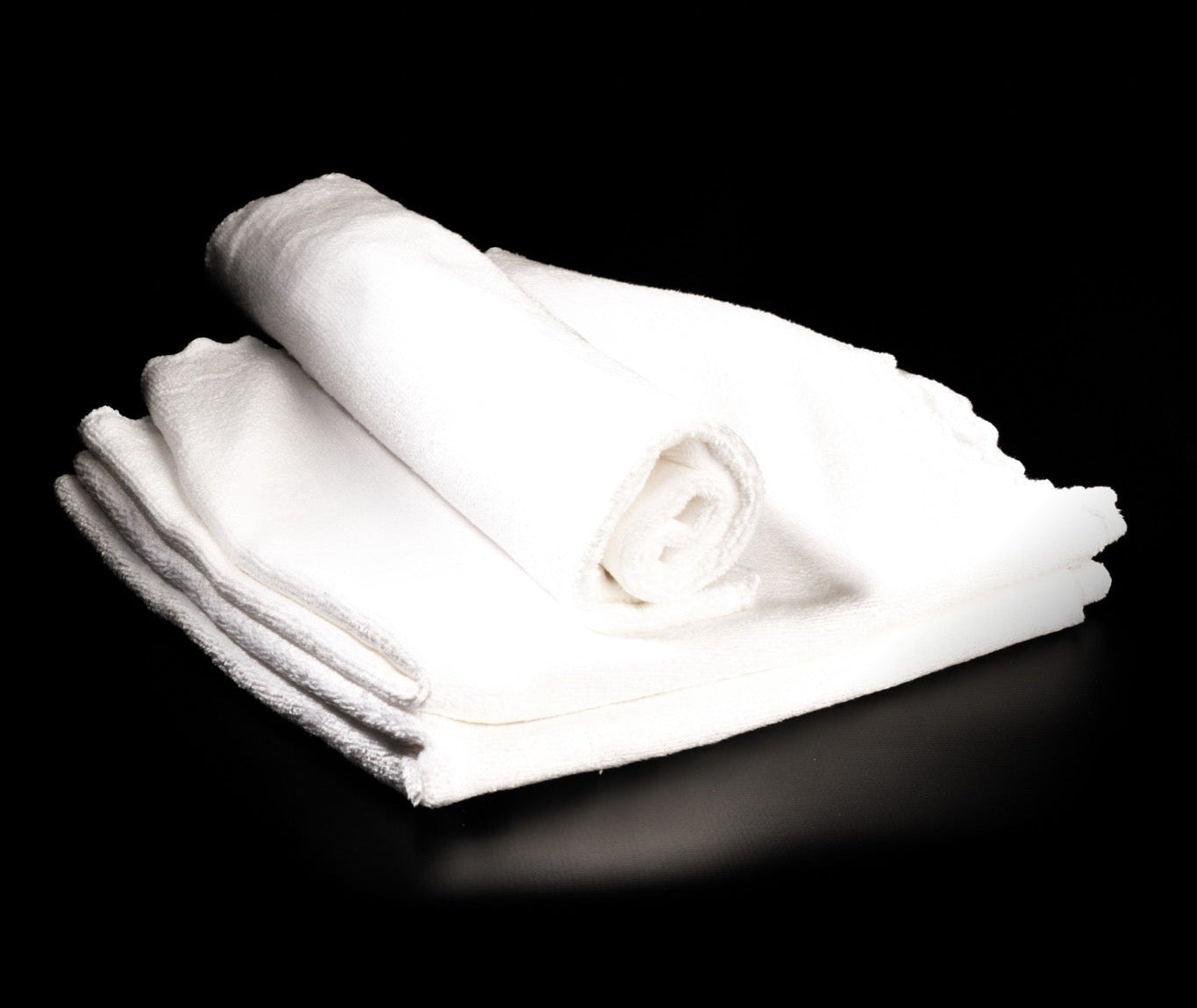
For upkeep, a pH-neutral prep and maintenance foam wash keeps the film clean without stripping it, and edgeless microfiber towels prevent the micro-marring that rough cloths cause. Reapplication timing depends on use, but plan on a refresh coat every few years on the busiest surfaces. The practical rule: when water stops beading and starts sheeting, the film is telling you it is time.
Titanium vs Ceramic Coating: Which Holds Up Better at Home
Titanium vs ceramic coating comes down to chemistry. Standard ceramic coatings are silica-based (SiO2). Titanium coatings add titanium compounds to that silica matrix.
In practice, the gap shows up in three places:
| Factor | Ceramic (SiO2) Coating | Titanium-Infused Coating |
|---|---|---|
| Hardness | High, typically 9H | Exceeds 9H |
| Chemical resistance | Good | Better against hard water and cleaners |
| Best for | Light-touch surfaces | Heavy-duty, high-traffic areas |
| Cost | Lower entry point | Higher per application |
Neither wins everywhere. For a guest bathroom vanity, a standard ceramic is sensible. For a family kitchen that sees daily cooking, the titanium option earns its price.
Hardness, Corrosion Resistance, and Wear Protection on High-Traffic Surfaces
The product carries a hardness rating exceeding 9H. It does not make a countertop scratch-proof.
Titanium Coating Safety for Kitchen Surfaces and Food-Contact Areas
Consult the specific product's documentation on safety and intended use before applying a titanium coating to kitchen surfaces.
Direct vs. Incidental Food Contact
The U.S. Food and Drug Administration regulates food-contact substances under the Federal Food, Drug, and Cosmetic Act. A coating intended for a countertop or backsplash is generally an incidental-contact surface, not a direct food-contact surface. A cutting board or a pan interior is direct contact. The distinction matters because a product rated for countertops is not automatically rated for direct food contact, and stretching it into that role is where safety questions arise.
For general guidance on food-contact materials, the FDA food contact substance guidance is the reference worth checking. Look for the specific product's intended-use statement rather than assuming all titanium coatings share the same clearance.
Safe-Use Conditions
Let the coating cure completely before food touches it, and confirm the specific product's intended use before applying it to a direct food-contact surface like a cutting board. Follow the manufacturer's cure schedule and coat thickness.
Indoor Air and Household Use
Ensure ventilation during application and cure, following the product's cure guidance.
Titanium Coating Maintenance: Cleaning, Reapplication, and Lifecycle Cost
A coated surface is cleaned with mild soap, water, and a soft cloth. Avoid abrasives, acidic cleaners, and scrubbing pads.
For upkeep, a pH-neutral prep and maintenance foam wash keeps the film clean without stripping it, and edgeless microfiber towels prevent the micro-marring that rough cloths cause. Reapplication timing depends on use, but plan on a refresh coat every few years on the busiest surfaces.
Lifecycle cost favors coatings once you count labor. A $199.99 bottle of LA Ti covers a substantial area, and spread across years of protection, the per-month cost sits well below repeated sealant purchases and the hours spent applying them.
Choosing the Right Titanium Coating for Your Home Surfaces
Match the product to the surface, not to the marketing. That is the whole decision.
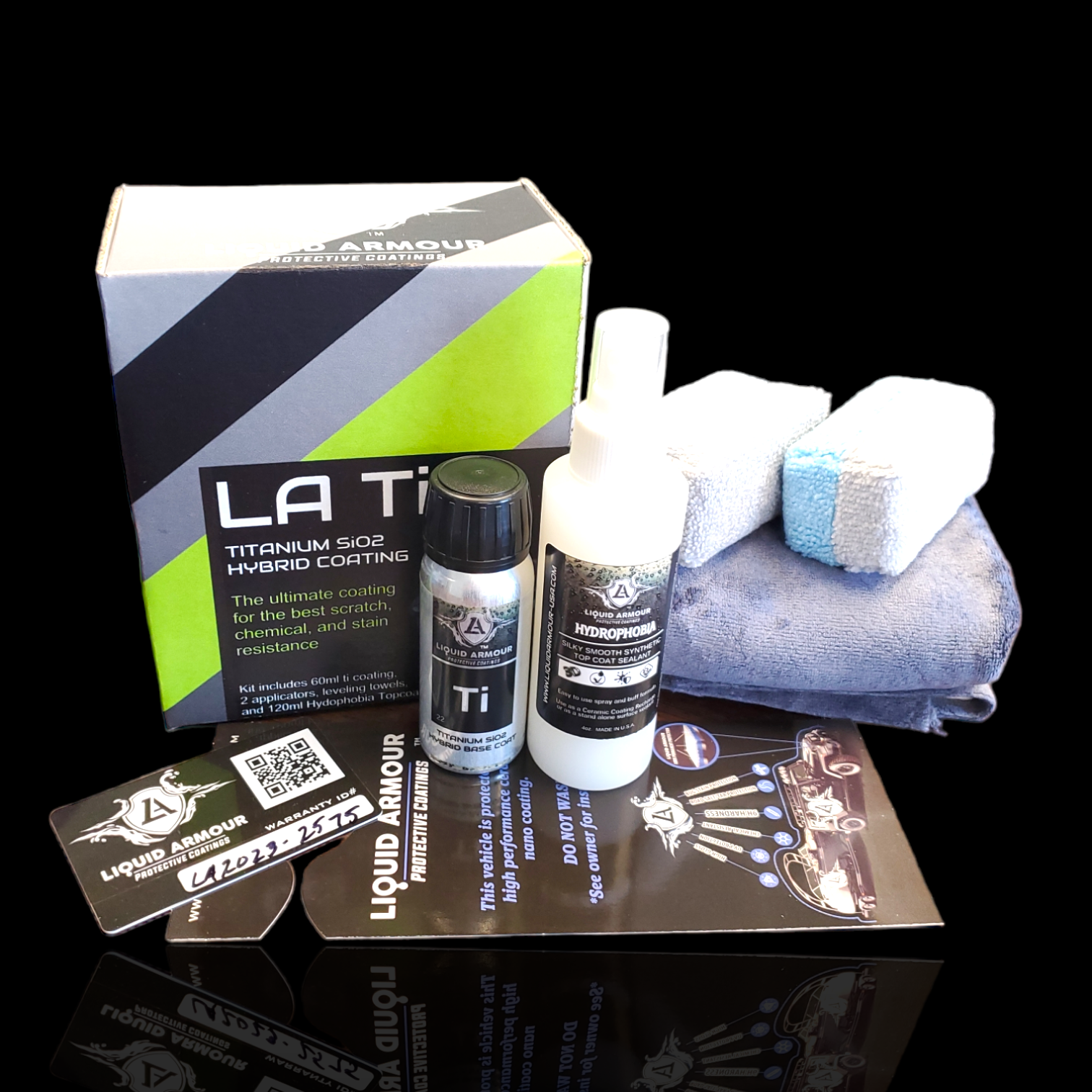
For heavy-duty applications like a kitchen island, a stone shower, or exterior fixtures, the LA Ti Titanium SiO2 Coating 60ML is our pick, and the complete kit adds the sealant, towels, and applicator blocks needed to do it right the first time. For lighter jobs, a multi-surface spray works fine.
Before you buy, score the surface honestly:
- Is it high-traffic or low-touch?
- Is it direct food-contact or incidental?
- Can it be fully cleaned and dried before application?
- Are you willing to maintain it with pH-neutral products?
Consider the professional-grade option if your answers point to heavy use and maintenance readiness.
Protecting home surfaces should not require a chemistry degree or a monthly waxing routine. Liquid Armour USA builds titanium-infused and nano-ceramic coatings with 9H+ hardness, a hydrophobic self-cleaning effect, and UV protection that keeps finishes looking new. Our SGS-tested formulas and professional installer network are here when you want the job done right. Get started with Liquid Armour USA and give your busiest surfaces a shield that lasts.
Frequently Asked Questions
What are the downsides of titanium coatings for home surfaces?
Titanium coatings cost more upfront than wax or basic sealants, and professional-grade formulas like LA Ti Titanium SiO2 Coating start at $199.99. Application requires surface prep; defects left under the coating stay visible. Some coatings need a top coat to reach full slickness, and reapplication is needed after years of heavy use. They also will not fix existing scratches or etch marks, only protect what is already in good condition.
Are titanium coatings safe for kitchen countertops and food-contact surfaces?
Safety depends on the specific product, so check the manufacturer's cure time and food-contact guidance before using items on treated surfaces. For kitchen counters, let the coating cure fully. Liquid Armour Nano Coat is formulated for multi-surface use on hard surfaces and textiles.
How long does a titanium coating last on household surfaces?
Durability varies by product and traffic. LA Ti Titanium SiO2 Coating, applied in two or more coats, is rated for 7+ years on heavy-duty applications, with certified installers able to offer a 7-year warranty depending on surface and coat count. Plan periodic inspection of high-touch areas.
Which is better for home surfaces, titanium or ceramic coating?
Titanium-infused SiO2 coatings combine titanium compounds with a silica matrix. LA Ti exceeds 9H hardness and reaches 5 microns per coat at 94% solids, which suits heavy-duty surfaces. Choose titanium for high-traffic kitchens, bathroom tile, and shower glass; choose a simpler spray coating for low-wear surfaces.