
7 Best Marine Surface Protection for Fiberglass (2026)
Table of Contents
- Best Marine Surface Protection for Fiberglass: Quick Comparison
- LA Ti Titanium Marine Coating: Maximum Durability
- LA9H Ceramic Nano Coating Pro Kit: Professional Standard
- HYDROPHOBIA Synthetic Sealant: Ceramic-Infused Maintenance
- Liquid Armour Nano Coat: Multi-Surface Versatility
- Nano Coat Waterproof Spray: Budget-Friendly Protection
- Marine Ceramic Coating Benefits vs. Traditional Wax
- How to Apply Boat Wax vs Ceramic Coating: Step-by-Step
- Frequently Asked Questions
Last Updated: September 7, 2026
Fiberglass hulls face a constant assault: UV radiation, saltwater, and oxidation that dulls gelcoat and leads to chalking. The best marine surface protection for fiberglass now goes far beyond traditional wax, which breaks down in weeks under harsh conditions. In this guide from Liquid Armour USA, we break down seven professional-grade options, comparing durability, application difficulty, and true cost per year of protection. Marine surface protection has evolved into nano-ceramic technology that bonds at a molecular level, creating a shield that resists chemicals, abrasion, and weathering far longer than any carnauba paste.
Best Marine Surface Protection for Fiberglass: Quick Comparison
The products below range from permanent, multi-layer ceramic systems to budget-friendly spray sealants, each offering a different balance of longevity and ease of use.

| Product | Price | Best For | Longevity | Key Feature |
|---|---|---|---|---|
| LA Ti Titanium Marine Coating | $379.99 | Maximum durability, professional install | 7+ years (2+ coats) | Titanium-SiO2 hybrid, 9H+ hardness |
| LA9H Ceramic Nano Coating Pro Kit | $134.99 | Professional standard, DIY or install | 3-5 years (warranted) | 9H hardness, thermal resistance |
| HYDROPHOBIA Synthetic Sealant | $59.99 | Maintenance topper or stand-alone | 6-12 months | Ceramic-infused, super slick finish |
| Liquid Armour Nano Coat | $49.99 | Multi-surface versatility | 6-12 months | Stain and UV protection on many materials |
| Nano Coat Waterproof Spray | $109.99 | Budget-friendly, large areas | 6-12 months | Extreme waterproofing, spray application |
LA Ti Titanium Marine Coating: Maximum Durability
For boat owners who demand the longest possible protection, the LA Ti Titanium Marine Coating is the top-tier option. This titanium-infused SiO2 hybrid is the most advanced formula Liquid Armour USA offers, designed for heavy-duty applications.

When two or more coats are applied, LA Ti delivers the longest-lasting protection in the lineup, rated at 7+ years. The hardness level exceeds 9H, providing the best scratch resistance while remaining healable with heat, a unique property that allows minor swirls to be removed without re-coating (peer-reviewed research). With a purity of 94% solids, it forms a dense, glass-like layer that resists staining from hard water and chemicals.
LA9H Ceramic Nano Coating Pro Kit: Professional Standard
The LA9H Ceramic Nano Coating Pro Kit is the professional standard: it offers a permanent bond with a high-gloss finish and a suite of protective properties. This is a true nano-ceramic coating, not a sealant, meaning it forms a chemical bond with the fiberglass rather than sitting on top of it.
This coating provides a super hydrophobic effect, causing water to bead and roll off, carrying dirt and grime with it. It also delivers scratch, chemical, and UV resistance, along with thermal resistance up to 800°C (sae.org). The unique formulation allows for multi-layering, so you can build a thicker, harder film for increased protection. For a boat owner who wants professional-grade protection without the price tag of the titanium option, this kit is the sweet spot.
HYDROPHOBIA Synthetic Sealant: Ceramic-Infused Maintenance
For those looking for a high-performance maintenance product, the HYDROPHOBIA Synthetic Sealant is a ceramic-infused option that bridges the gap between traditional wax and permanent coatings. It's designed to give virtually any surface a silky smooth finish with superior water beading.

This sealant serves a dual purpose. First, it acts as a topper that helps existing ceramic coatings last longer while adding a layer of slickness and shine. Second, it works as a stand-alone sealant for boat owners who aren't ready for the commitment of a permanent 9H coating. It works great on gelcoat, glass, trim, and stainless steel, making it a versatile addition to any detailing arsenal. The gentle formula won't strip existing wax or sealants.
Liquid Armour Nano Coat: Multi-Surface Versatility
Marine protection isn't just about the hull. The Liquid Armour Nano Coat is a multi-surface solution for textiles, vinyl, and other hard surfaces. This hydrophobic treatment forms nanoscale layers that bestow anti-stain and water-resistant properties, making surfaces incredibly easy to clean.

This versatility is its main strength. It protects canvas tops from water spots and mildew, keeps vinyl upholstery from staining, and adds a layer of UV protection to interior and exterior components. It can be applied via dip, wipe, or spray, making it simple to treat everything from a Bimini top to a set of fenders. It's an essential complement to a hull coating for comprehensive marine surface protection.
Nano Coat Waterproof Spray: Budget-Friendly Protection
For boat owners covering large areas or seeking a cost-effective entry into nano-technology, the Nano Coat Waterproof Spray offers extreme waterproofing and spill protection in an easy-to-apply format, without the labor-intensive process of a full ceramic coating.
The spray format makes it ideal for hard-to-reach areas or for quickly treating large sections of canvas or non-skid surfaces. Like the Nano Coat, it provides UV protection and stain resistance. It's a particularly good option for trailerable boats where the owner wants to maintain the vessel themselves. While it won't offer the multi-year durability of a 9H coating, it provides a solid, easily renewable layer of protection that keeps a boat looking sharp between major detailing sessions.
Marine Ceramic Coating Benefits vs. Traditional Wax
The choice between a ceramic coating and traditional wax is about matching protection to your boating environment and maintenance budget. The core difference is the bond: wax is a sacrificial layer on top of the gelcoat, while a ceramic coating forms a chemical bond with the surface.
Climate-Specific Performance
Saltwater Environments (Coastal and Offshore): Salt crystals are abrasive and hygroscopic. Traditional wax breaks down rapidly here, often within 2 to 4 weeks. A ceramic coating forms a dense, non-porous barrier that salt cannot penetrate. For boats kept in saltwater slips, a ceramic coating is the minimum viable protection to prevent gelcoat degradation between seasons.
Freshwater Environments (Lakes and Rivers): Freshwater is less aggressive but introduces mineral deposits, algae, and tree sap. A high-quality synthetic sealant applied every 6 to 8 weeks may suffice for a trailered boat (westmarine.com). However, for a boat that sits in a freshwater slip all season, a ceramic coating prevents mineral deposits from bonding to the surface.
Tropical and High-UV Climates (Florida, Gulf Coast, Southwest): UV radiation breaks down the resin, causing oxidation and chalking. A traditional wax will degrade from UV exposure in weeks, even if the boat is not used. Ceramic coatings with UV-resistant properties (like LA9H and LA Ti) absorb and dissipate UV energy before it reaches the gelcoat. Waxed boats will show chalk within one season, while ceramic-coated boats maintain their gloss for multiple years.
Cost-Per-Application Analysis
DIY Wax Route:
- Cost of a quality marine wax: $20 to $40 per container.
- Application frequency: every 4 to 6 weeks in saltwater or high-UV climates.
- Annual wax cost: $160 to $320 (assuming 8 to 12 applications per season).
- Labor: 2 to 3 hours per application, or 16 to 36 hours per year.
- Five-year total (product only): $800 to $1,600.
Professional Wax Route:
- Cost per professional wax application: $150 to $300 depending on boat length.
- Frequency: every 4 to 6 weeks.
- Annual cost: $1,200 to $3,600.
- Five-year total: $6,000 to $18,000. professional ceramic coating.
DIY Ceramic Coating Route (e.g., LA9H Pro Kit):
- Cost of kit: $134.99.
- Application frequency: once every 3 to 5 years.
- Labor: 6 to 8 hours for surface prep and application.
- Five-year total (product only): $134.99 to $269.98 (if a second application is needed).
Professional Ceramic Coating Route:
- Cost of professional application (including prep): $800 to $2,500 depending on boat size and condition.
- Frequency: once every 3 to 7 years.
- Five-year total: $800 to $2,500.
The Environmental Angle
Ceramic coatings, once cured, are inert and do not release chemicals. Because ceramic coatings last years rather than weeks, they also reduce packaging waste from frequent wax purchases.
How to Apply Boat Wax vs Ceramic Coating: Step-by-Step
Before any protection goes on, the surface must be sound. Applying a ceramic coating or wax over a degraded surface will seal in the damage and shorten the life of the protection. The correct sequence is restore first, then protect.
Step 1: Assess the Gelcoat Condition
Run your hand over the hull after washing. A white, powdery residue is chalking, oxidized gelcoat breaking down. A simple test: apply a few drops of water. If the water soaks in or leaves a dark wet mark rather than beading up, the gelcoat is porous and needs compounding before any coating will bond properly.
Step 2: Restore the Surface (Compounding and Polishing)
For chalky or oxidized gelcoat, a standard wash is not enough. You need to remove the dead layer to expose fresh gelcoat underneath via a progressive machine-polishing process:
- Wet-sand (only if heavily oxidized): For severe chalking, wet-sanding with 1000 to 1500-grit sandpaper removes the dead layer. This is aggressive and only recommended if compounding alone does not bring back the color.
- Compound: Use a marine-grade rubbing compound with a wool or foam cutting pad on a dual-action polisher. Work in small 2x2-foot sections at a moderate speed. The compound will turn chalky as it removes the oxidized layer. Wipe off the residue immediately.
- Polish: Follow with a finer polish and a softer foam pad to remove the haze left by the compound and restore a deep gloss. This step is critical, a ceramic coating will magnify any swirl marks left behind by the polish.
- Final wipe-down: Use a dedicated panel wipe or isopropyl alcohol solution to remove any polishing oils. These oils will prevent a ceramic coating from bonding. This is the single most common reason for premature coating failure.
Step 3: Apply the Protection
Applying Wax (Traditional):
- Apply a thin, even layer to a small section using a foam applicator.
- Allow it to haze over (typically 5-10 minutes).
- Buff off with a clean, dry microfiber towel.
Applying Ceramic Coating:
- Work in a shaded, cool area. Apply a few drops of the coating to a dedicated applicator.
- Spread the coating in a crosshatch pattern (horizontal then vertical) over a small section.
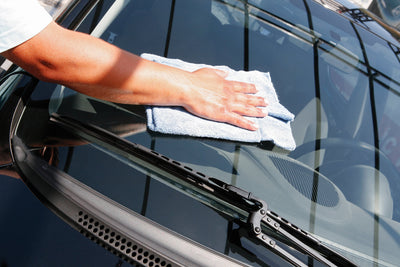
- Wait for the coating to flash (a rainbow-like appearance) and then level it with a clean microfiber towel.
- Allow the coating to cure. The boat should not be exposed to water for the manufacturer-specified period, often 24 to 48 hours.
The restoration step separates a professional-grade result from a temporary fix. By addressing the chalky gelcoat before applying protection, you are rebuilding the integrity of the fiberglass itself.
Frequently Asked Questions
Does ceramic coating prevent fiberglass oxidation?
Yes. Ceramic coatings form a hard, inert barrier that blocks UV radiation and oxygen from reaching the gelcoat, which are the two primary causes of oxidation. Unlike wax that degrades within weeks, a marine ceramic coating like LA9H bonds at a molecular level and resists weathering for years. This prevents the chalky, faded appearance common on unprotected fiberglass hulls. For best results, restore any existing oxidation before application so the coating bonds to sound gelcoat.
How often should you apply marine surface protection to fiberglass?
The frequency depends on the product type. Traditional wax requires reapplication every 6 to 12 weeks to maintain protection. Synthetic sealants like HYDROPHOBIA last 3 to 6 months. Professional-grade ceramic coatings last far longer: LA9H provides 3 to 5 years of protection, while LA Ti Titanium can last 7 or more years when multiple coats are applied. Your boat's environment matters too, saltwater moorage and intense sun accelerate wear on any protection.
How long does ceramic coating last on a boat compared to wax?
A quality marine ceramic coating lasts 3 to 7 years, depending on the formulation and number of coats applied. Boat wax typically lasts only 4 to 8 weeks in marine conditions before it degrades from UV exposure and saltwater. Over a 5-year period, you would need to wax your boat roughly 30 times. A ceramic coating applied once eliminates that recurring labor and material cost, making it the more economical choice for boat owners who value their time.
Can I apply ceramic coating over old wax on my fiberglass hull?
No. Ceramic coatings will not bond to any surface contaminated with wax, silicone, oil, or grease. The coating needs to bond directly to the gelcoat to form its protective layer. You must strip all old wax using a dedicated prep product like LA PREP+, which safely breaks down wax and silicone without harming the gelcoat. After prepping, the surface should feel clean and water should sheet off evenly, indicating it is ready for coating application.