
7 Best Foam Washes for Saltwater Boat Maintenance
Last Updated: November 16, 2026
Quick Summary
The best foam wash for saltwater boat maintenance is pH-neutral, wax-free, and formulated to suspend salt so it rinses away instead of bonding to gel coat and metal. Choose a concentrated wash that clings for 3 to 5 minutes of dwell time, and avoid high-alkaline soaps on bare aluminum.
- Foam needs 3 to 5 minutes of contact to dissolve dried salt before you rinse.
- High-alkaline soaps dull bare aluminum and speed oxidation, so pick pH-neutral formulas.
- A wash that leaves wax behind traps salt against the finish and complicates the next deep clean.
- Hard water fights foam generation, so a slightly richer mix usually fixes thin, runny foam.
- The gallon Decon+ at $79.99 covers roughly 128 washes, dropping cost per wash to about $0.62.
Table of Contents
- What Separates the Best Foam Wash for Saltwater Boat Maintenance
- Quick Comparison: Foam Wash Options for Saltwater Boats
- The Best Boat Soap for Saltwater: What to Look For
- Foam Cannon Boat Wash Setup: Dilution Ratios and Spray Settings
- How to Wash a Boat After Saltwater Use
- Boat Wash With Ceramic Protection: Making the Finish Easier to Clean
- Cost Per Wash and Product Value
- Pick Your Foam Wash and Protect the Finish
- Frequently Asked Questions
What Separates the Best Foam Wash for Saltwater Boat Maintenance
Salt is the enemy, and most boat owners fight it with the wrong weapon. The best foam wash for saltwater boat maintenance does three jobs at once: it lifts salt residue before it bonds to the finish, it clings long enough to dissolve dried salt crystals, and it rinses away without leaving a film that traps moisture. A wash is best judged by one standard: does it leave a surface clean enough for protection to bond, or does it leave salt behind?
Saltwater corrosion starts fast. A hull rinsed with a garden hose and a squirt of dish soap still carries salt in the seams, the rub rail, and the trailer hardware. Foam changes that math because foam dwell time does what a quick rinse cannot: it gives the chemistry time to work.
Salt Neutralizing Chemistry and Dwell Time
A salt neutralizer is a wash formulated to break the ionic bond salt forms with gel coat and metal. Ordinary soap lifts dirt but leaves salt crystals behind. A proper marine soap carries chelating agents that grab sodium and chloride and hold them in suspension until the rinse carries them off.
Dwell time is where most washes fail. Foam needs 3 to 5 minutes of contact to dissolve dried salt. Rinse it off in 30 seconds and you have wasted the product. Watch out: letting foam dry on the hull in direct sun leaves water spots and can etch a dark finish, so work in shade and keep the surface wet.
Surface Safety: Gel Coat, Vinyl, Metal, and Aluminum
Not every surface on a boat tolerates the same chemistry. Gel coat and painted surfaces handle a pH-neutral foaming wash without issue. Vinyl cushions and enclosures want a gentler touch, and bare aluminum is the pickiest surface on the whole boat.
Aluminum reacts badly to high-alkaline soaps, which dull the finish and speed oxidation. A pH-neutral, wax-free, dye-free formula is a sound choice for surfaces where you want to avoid harsh chemistry.
Quick Comparison: Foam Wash Options for Saltwater Boats
Bottle price tells you little on its own. Cost per wash depends on how much concentrate each wash uses, which varies with cannon dilution and hull size.
| Product | Price | Approx. washes at 1 oz/load | Cost per wash | Best For | Key Trait |
|---|---|---|---|---|---|
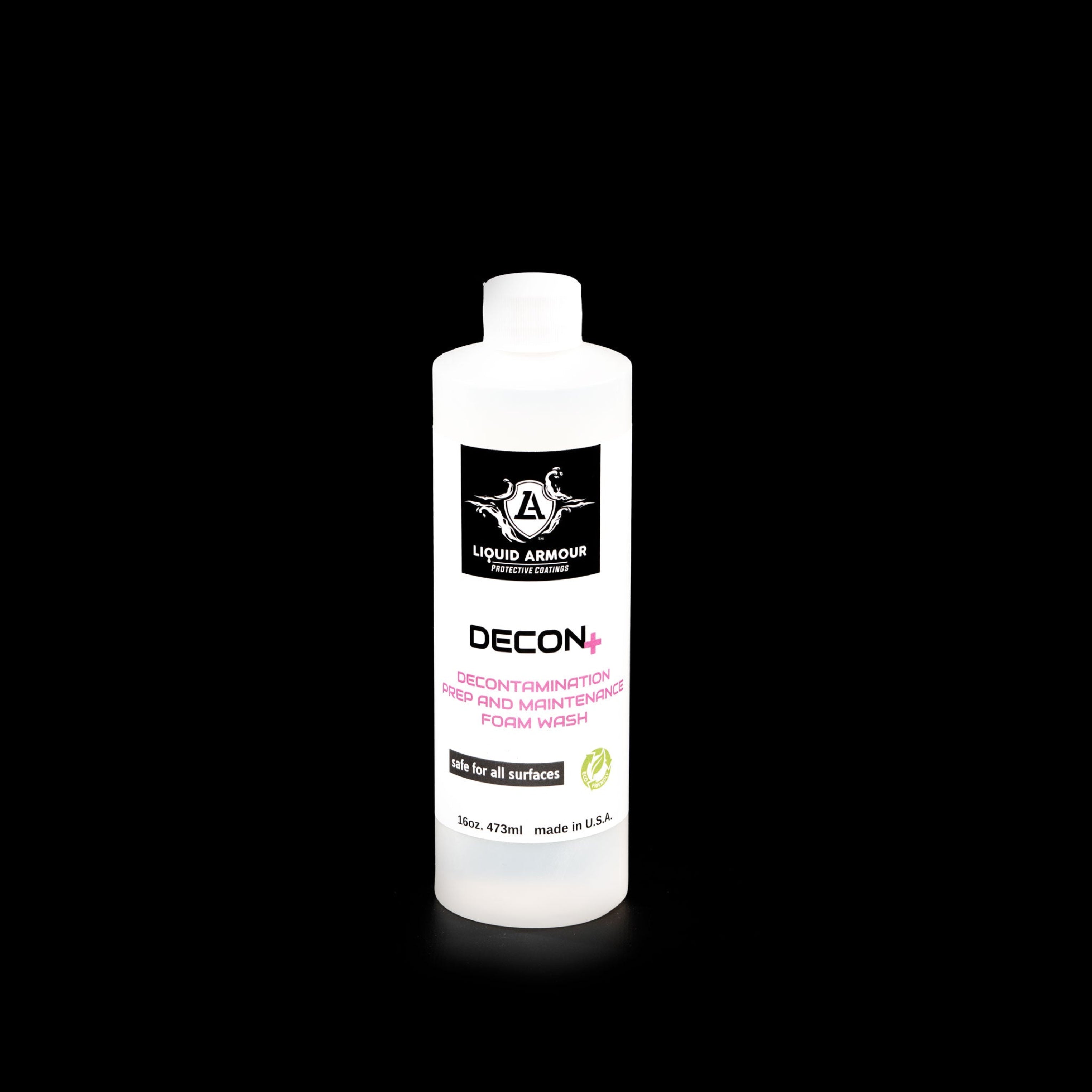
| Decon+ Prep & Maintenance Foam Wash | $19.99 | ~16 | ~$1.25 | Weekend boat owners, one hull | pH-neutral, wax-free, dye-free |
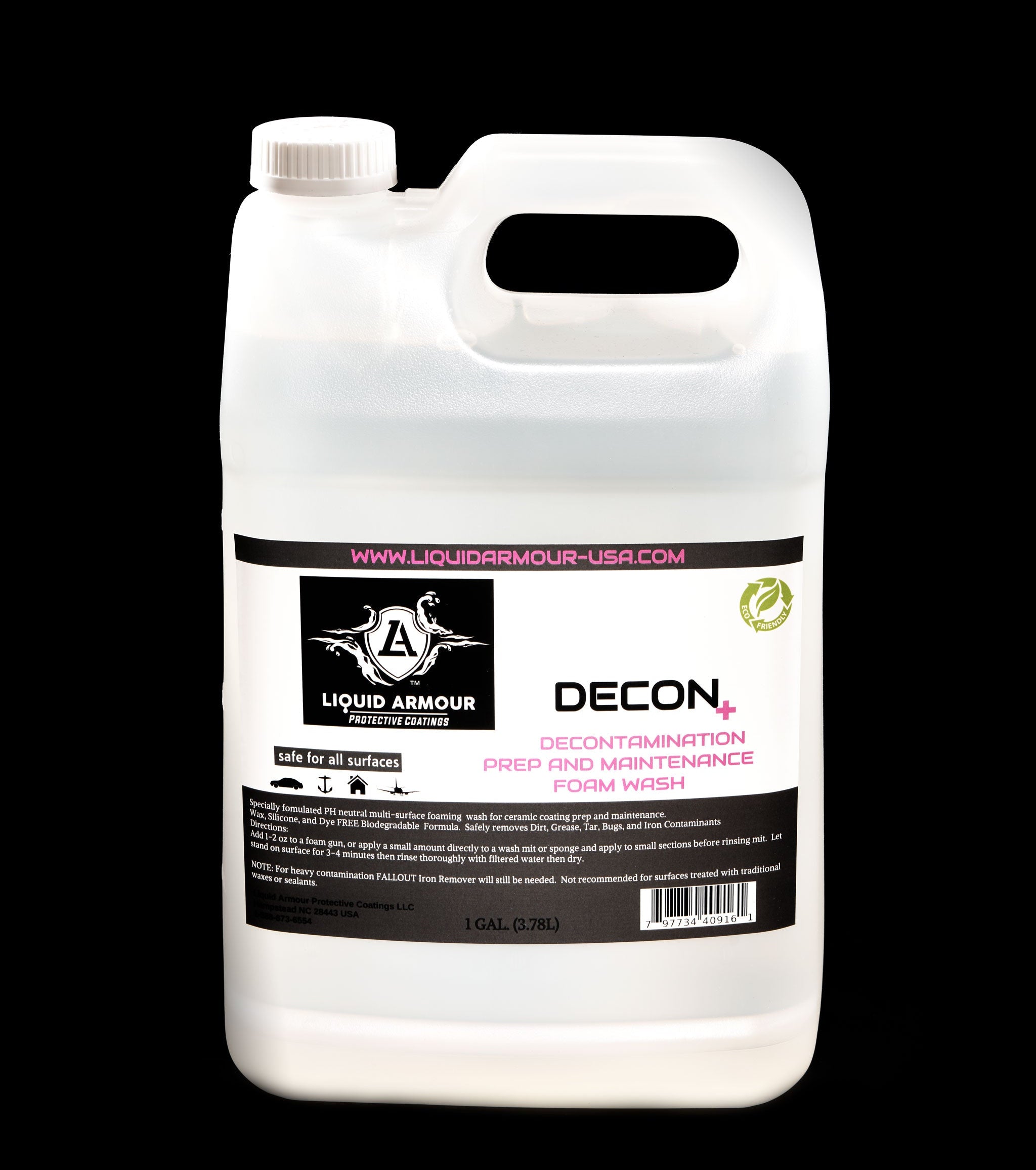
| Decon+ Prep & Maintenance Foam Wash | $79.99 | ~128 | ~$0.62 | Boatyards, weekly washers, multi-hull owners | Same formula, bulk value |
| LA Ti Titanium Marine Coating | $379.99 | Not a wash (protective layer) | Not applicable | Long-term saltwater protection | Titanium-infused SiO2 hybrid, 9H+ |
The per-wash figures are estimates based on one ounce of concentrate per cannon load, so actual usage will vary with hull size and cleaning frequency.
Surface compatibility is the other half of the comparison. Decon+ is formulated pH-neutral and free of wax, silicone, and dyes. Choose a wash that suits each surface on your boat, and check the label before using it on bare aluminum or other delicate finishes.
The LA Ti coating is not a wash and should not be compared on a per-wash basis. It is a protective layer applied separately from the wash.
If you want to see the small format up close, you can view the 16oz Decon+ foam wash and check the label details before committing.
The Best Boat Soap for Saltwater: What to Look For
The best boat soap for saltwater is pH-neutral, free of wax and silicone, and formulated to suspend salt rather than just lift dirt. Three traits separate a real saltwater wash from a generic car soap.
First, pH neutrality. High-alkaline soaps clean aggressively but attack aluminum and strip protective layers. Second, no wax or silicone. A wash that leaves wax behind fights the coating you plan to apply later. Third, high foaming action. Thick foam clings to vertical hull sides long enough to work, while thin soapy water runs straight off.
- Chelating agents that bind salt ions for removal
- Biodegradable, eco-friendly chemistry for runoff near water
- Concentrated formula so a small measure makes a full cannon load
- No dyes that stain gel coat or vinyl
A common mistake is buying a wash that doubles as a wax. It feels efficient. In practice, the wax layer traps salt against the finish and makes the next deep clean harder.
Foam Cannon Boat Wash Setup: Dilution Ratios and Spray Settings
A foam cannon boat wash lives or dies on the dilution ratio, and the ratio depends on three variables most guides ignore: the cannon's built-in dilution, your water hardness, and the pressure washer's output. Get those right and the foam clings for minutes; get them wrong and you are spraying soapy water that slides off before it works.
Start with the cannon, not the bottle. Foam cannons draw concentrate at fixed ratios that depend on the model and metering tip, so follow your cannon's instructions and adjust the mix based on how the foam performs on the hull.
Water hardness is the variable that throws off most first-time users. Hard water carries dissolved calcium and magnesium that fight foam generation, so the same ratio that produces thick foam with soft water can produce thin, runny foam with hard water.
Pressure washer output matters too. A cannon rated for a certain flow rate will underperform on a machine that delivers less water, and over-foaming on a high-output machine can waste concentrate. Match the cannon's rating to your machine before blaming the soap.
Spray settings matter as much as the mix:
- Set the cannon to a wide fan for broad hull coverage, working in overlapping passes.
- Switch to a narrow stream for the scum line, seams, and trailer hardware where salt collects.
- Work top to bottom so clean foam pushes dirty runoff downward instead of recontaminating clean sections.
- Keep the nozzle moving to avoid pooling in one spot, which can leave a concentrated residue ring.
- Let the foam dwell 3 to 5 minutes, then rinse before it dries.
Foam coverage should be even and cling for several minutes. If it slides off in seconds, thicken the mix or check that your pressure washer output matches the cannon's rating.
How to Wash a Boat After Saltwater Use
Washing a boat after saltwater use follows a fixed order: rinse, foam, dwell, agitate, rinse again, dry. Skip a step and salt stays in the seams.
Step 1: Freshwater rinse first. Knock off loose salt and sand before foaming. This stops you from grinding grit into the gel coat with a wash mitt.
Step 2: Apply foam. Load the cannon with Decon+ at the dilution above and coat the hull, deck, and trailer frame. Let it stand 3 to 4 minutes.
Step 3: Agitate the scum line. Use a soft mitt on the waterline where grime and marine deposits collect. Rinse the mitt often.
Step 4: Rinse thoroughly. Work top to bottom with filtered water if you have it, since hard water leaves spots.
Step 5: Dry and protect. Dry with a microfiber towel, then apply a protective layer. A waterproof spray like Nano Coat Waterproof Spray adds a hydrophobic top coat that makes the next wash faster.
Watch out: washing in full sun lets foam and rinse water dry before you finish, which leaves mineral spots and salt streaks that look like damage.
Boat Wash With Ceramic Protection: Making the Finish Easier to Clean
Ceramic protection changes the economics of boat maintenance. A nano-ceramic layer creates a hydrophobic, glass-like shield that salt and grime struggle to bond to, so each wash removes more with less effort.
For saltwater boats, the payoff is corrosion prevention. Salt sits on the surface instead of soaking into gel coat pores. A titanium-infused SiO2 hybrid coating like LA Ti Titanium Marine Coating is built for heavy-duty marine use, with a hardness exceeding 9H. Certified professional installers can offer a 2-4 year warranty on marine surfaces.
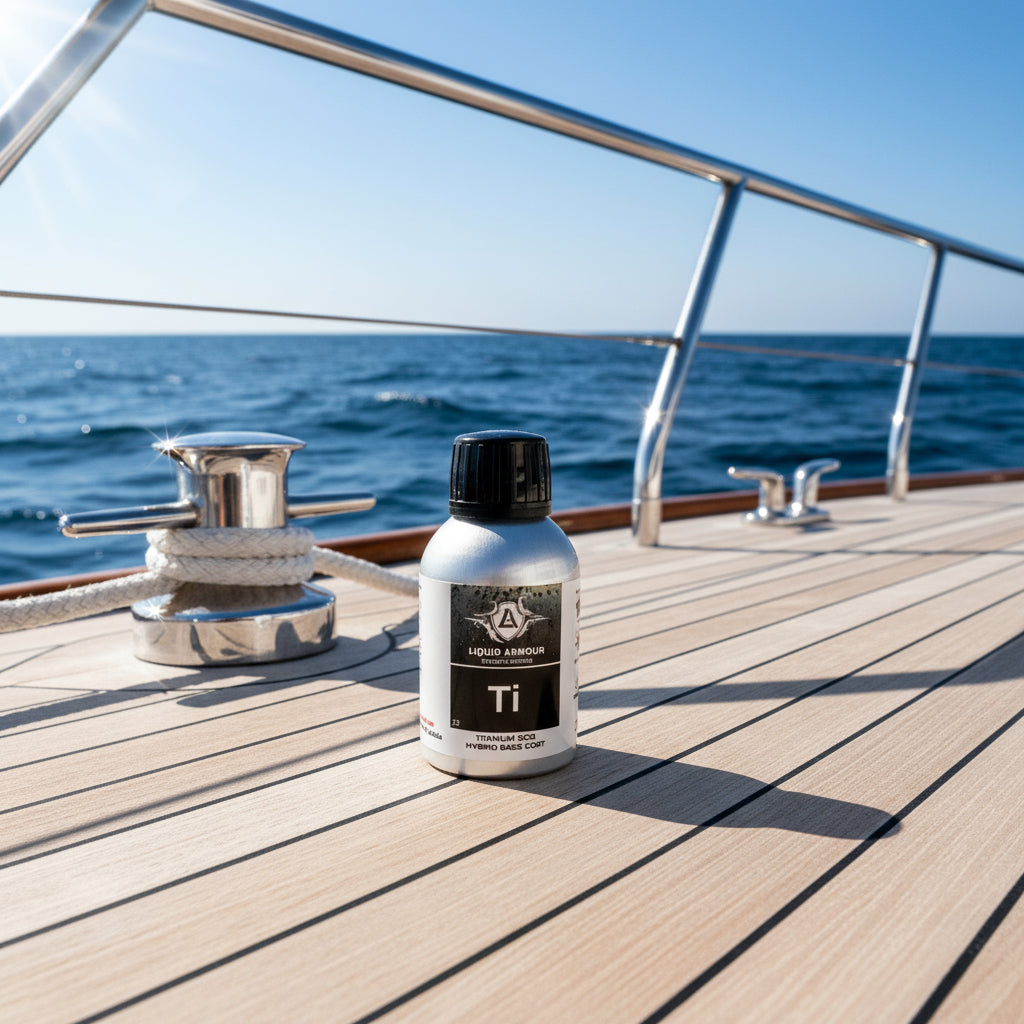
The catch is prep. A coating bonds only to a genuinely clean surface, which is why the wash step matters so much. Foam first, coat second.
Cost Per Wash and Product Value
Cost per wash is the number that separates a bargain from a budget trap. A $19.99 bottle feels cheap until you calculate how many washes it delivers.
At roughly 1 oz per cannon load, the 16 oz bottle covers about 16 washes, or a little over a dollar per wash. The gallon at $79.99 covers roughly 128 washes at the same rate, dropping the per-wash cost to well under a dollar. For a boatyard running multiple hulls a week, the gallon pays for itself quickly.
The gallon Decon+ foam wash suits owners who wash frequently, while the 16 oz bottle suits occasional use.
Compare that against the cost of correction. Correcting oxidized gel coat, pitted aluminum, or stained vinyl typically costs more than routine cleaning supplies.
Pick Your Foam Wash and Protect the Finish
Choosing the best foam wash for saltwater boat maintenance comes down to matching the format to your washing frequency, then locking in protection so the next wash is easier than the last.
Start with Decon+. It is pH-neutral, free of wax, silicone, and dyes, and it removes salt, grease, tar, and iron contaminants without attacking gel coat, vinyl, or aluminum. Pair it with a ceramic layer and saltwater stops being a maintenance emergency.
For between-wash touch-ups, a quick detailer keeps the finish slick and the shine intact. You can shop the Quick Shine Nano Detailer to round out a full saltwater care kit.
Saltwater punishes boats that go unprotected, and the damage compounds with every trip. Liquid Armour USA builds nano-ceramic coatings with 9H+ hardness and a hydrophobic effect. Our coatings are SGS tested, and our professional installer network can help boat owners who want professional application.
Frequently Asked Questions
Can you use a foam cannon to wash a boat?
Yes. A foam cannon attached to a pressure washer is one of the fastest ways to cover a hull, deck, and trailer with soap. Add the concentrate to the cannon bottle following the product directions, adjust the spray to a wide fan, and work from the waterline up so dirty runoff does not streak clean gel coat. Let the foam dwell 3-4 minutes, then rinse with filtered water. Keep the pressure tip back from vinyl, decals, and aluminum to avoid damage.
What is the best boat soap for removing salt?
Look for a pH-neutral, high-foaming marine soap that lifts salt residue without stripping wax or a ceramic coating. A dedicated salt neutralizer helps on heavily exposed areas like the transom, running gear, and trailer axles. Liquid Armour USA's Decon+ Prep & Maintenance Foam Wash is pH neutral and free of wax, silicone, and dyes, so it cleans salt, grime, and scum lines without leaving a film. Follow with a freshwater rinse to flush salt from crevices.
How often should you wash a boat after using it in saltwater?
Rinse the hull, deck, trailer, and engine flush port with fresh water immediately after every saltwater outing, then do a full foam wash within a few days. Salt residue pulls moisture from the air and accelerates corrosion on metal and aluminum, so leaving it on longer than a week gives it time to bond to gel coat and hardware. Boats kept in a slip benefit from regular washing and more frequent freshwater rinses.
Does foaming boat wash remove oxidation?
No. A foaming wash lifts dirt, salt film, grease, and scum lines, but oxidation is dead, chalky gel coat that needs mechanical correction. If the surface feels chalky after washing and drying, you need a compound or polish step before any protection goes on. Once the gel coat is corrected, a protective coating like Liquid Armour USA's LA Ti Titanium Marine Coating can be applied to the finish.