
Essential Products for Luxury Car Paint Decontamination
Last Updated: November 22, 2026
Quick Summary
The products you need for paint decontamination are an iron remover, a pH-neutral decontamination wash, a clay bar or clay mitt with lubricant, edgeless microfiber towels, and a protective coating to seal the finish. Each item removes a different layer of contamination without harming a delicate clear coat.
- Every chemical step should be pH-neutral to avoid etching a luxury finish.
- Never clay a panel before chemical decontamination, or sharp particles will mar the clear coat.
- Let iron remover dwell out of direct sun and rinse before it dries to avoid streaks.
- A dropped clay bar or mitt should be discarded, no exceptions.
- Budget for a 20-pack of edgeless microfiber towels for drying and wipe-down.
Table of Contents
- What products do you need to decontaminate luxury car paint?
- How to decontaminate car paint without marring a luxury finish
- Choosing an iron remover for car paint
- Automotive clay bar and lubricant: mechanical decontamination done safely
- Chemical versus mechanical decontamination: a decision tree
- Ceramic coating maintenance wash after decontamination
- Build your decontamination kit with Liquid Armour USA
- Frequently Asked Questions
What products do you need to decontaminate luxury car paint?
The products you need to decontaminate luxury car paint are an iron remover, a pH-neutral decontamination wash, a clay bar or clay mitt with lubricant, edgeless microfiber towels, and a protective coating to seal the finish afterward.
Paint decontamination is the process of stripping bonded contaminants, such as iron fallout, brake dust, rail dust, tar, and tree sap, from the paint surface before polishing or coating, and a proper paint decontamination routine starts with the right products.
Luxury finishes raise the stakes. Softer clear coats and darker colors show every scratch, so product choice matters more than technique alone.
The complete compatible shopping list
A decontamination kit only works when every product plays nicely with the next. Here is the list we recommend, with the role each item plays:
| Product | Role | Format | Price |
|---|---|---|---|
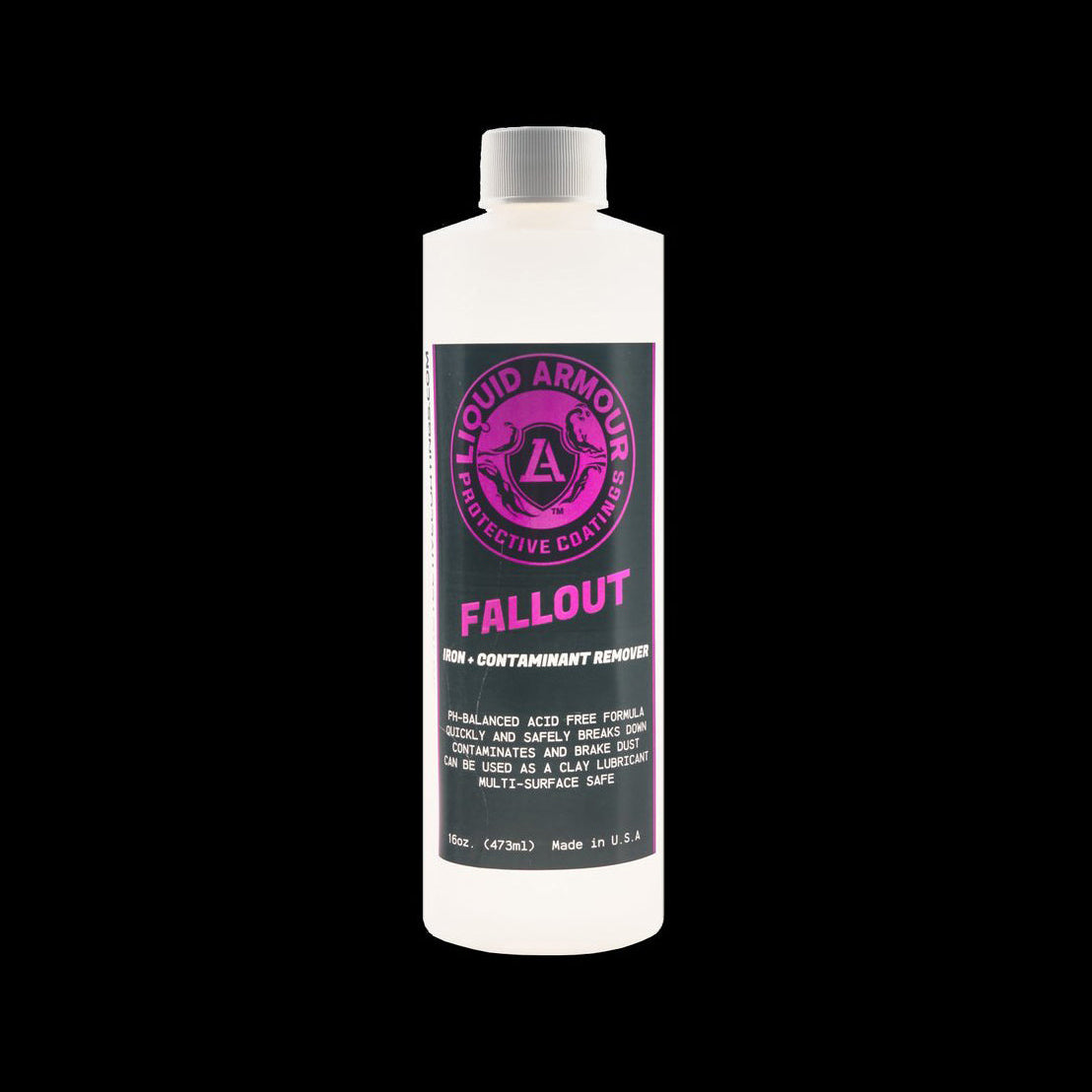
| Fallout Iron Remover 16oz | Dissolves iron fallout and brake dust | pH-neutral spray | $19.99 |
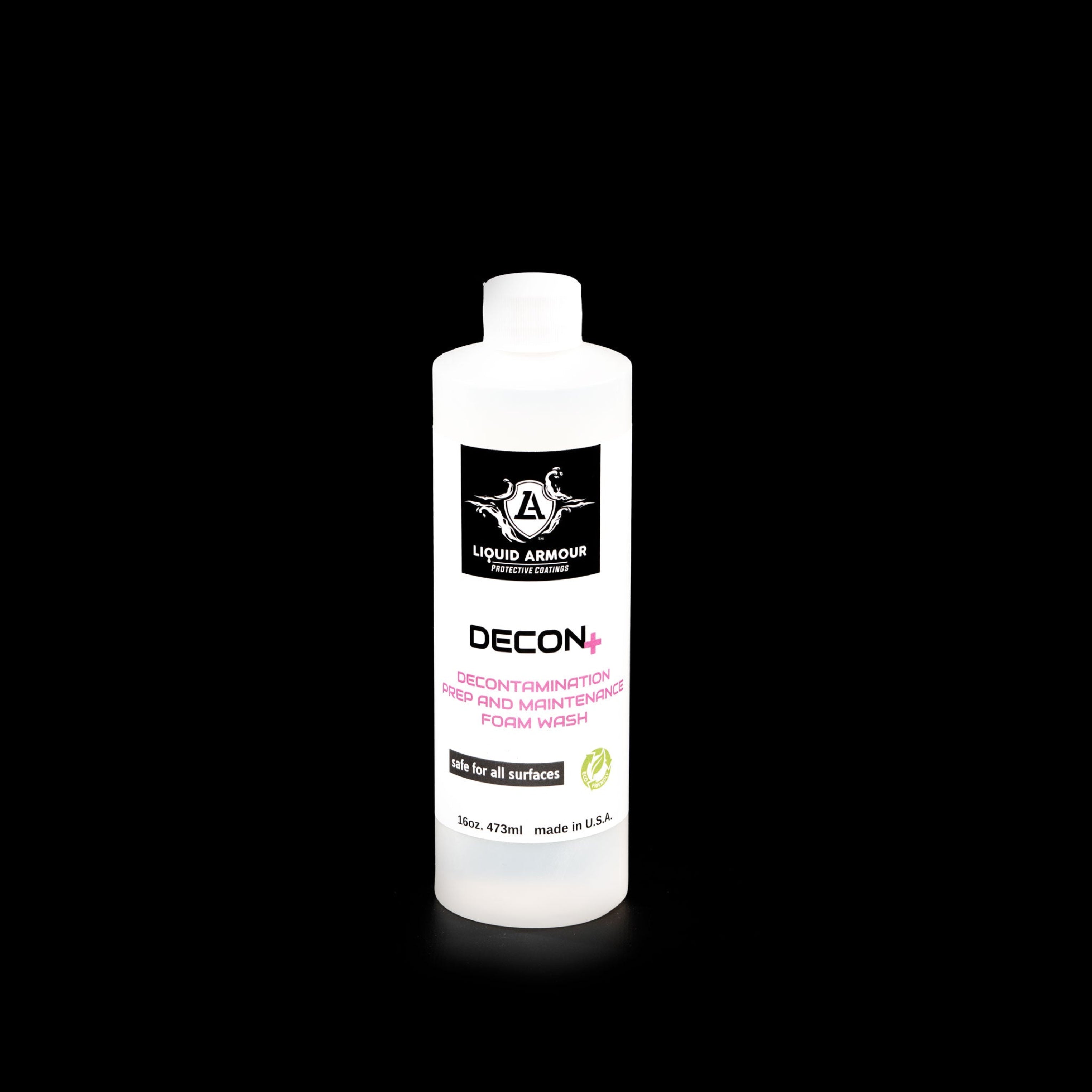
| Decon+ Prep & Maintenance Foam Wash 16oz | Pre-wash and maintenance wash | pH-neutral foam | $19.99 |
| Automotive clay bar or clay mitt | Pulls mechanical contamination | Bar, mitt, or disc | Varies |
| Clay lubricant | Prevents marring during claying | Spray bottle | Varies |
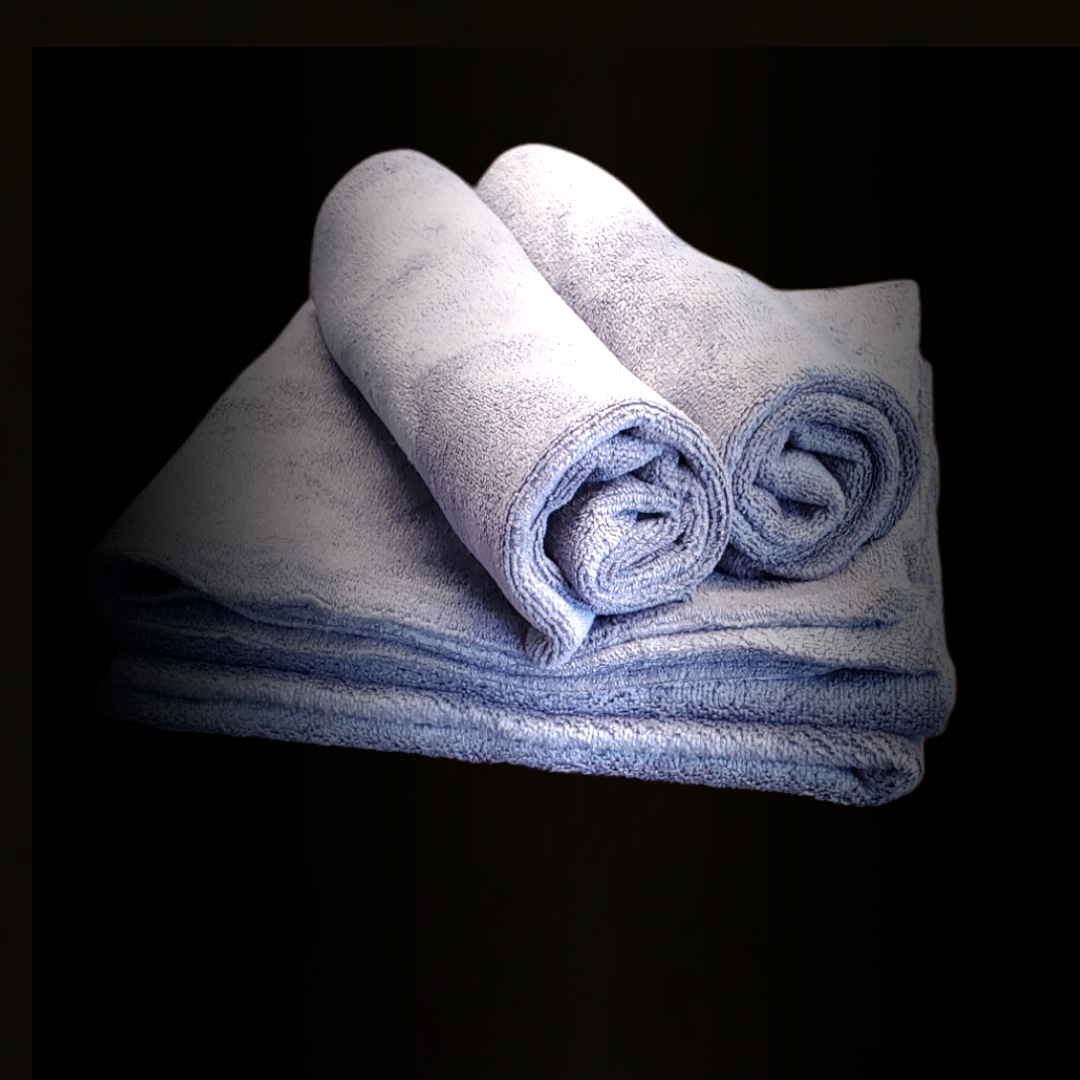
| Edgeless microfiber towels | Drying and wipe-down | 16x16, 20 pack | Varies |
| Nano-ceramic coating | Seals the decontaminated surface | Liquid coating | Varies |
Two rules keep this list compatible. First, every chemical step should be pH-neutral to avoid etching the finish. Second, never clay a panel that has not been chemically decontaminated first. Claying over iron fallout drags sharp particles across the clear coat and creates the swirl marks you were trying to avoid.
How to decontaminate car paint without marring a luxury finish
The safe way to decontaminate car paint is to work from the least aggressive method to the most aggressive, checking the surface at every stage. Chemical decontamination comes first, mechanical claying second, and any polishing only if inspection shows it is needed. Skipping straight to clay is the most common mistake we see, and it is the one that produces marring on soft luxury clear coats.
Step-by-step workflow and risk controls
Total time: 2 to 3 hours for a mid-size luxury sedan. Difficulty: Beginner to intermediate.
- Wash the vehicle. Use the Decon+ foam wash as a pre-wash, let it dwell 3 to 4 minutes, then rinse thoroughly with filtered water and dry with edgeless microfiber towels.
- Apply iron remover to cool paint. Work in sections, out of direct sun. Let the product dwell according to the label, then rinse before it dries.
- Inspect the paint surface. Run a plastic bag over the panel. Rough spots mean contamination remains.
- Clay only where needed. Lubricate generously, use light pressure, and work in small sections.
- Rinse and dry. Use fresh microfiber towels and pat rather than scrub.
- Protect the finish. Apply a nano-ceramic coating to seal the now-bare clear coat.
Watch out: Letting iron remover dry on the panel in direct sun can leave streaks that require polishing to remove. Work in shade, one panel at a time.
Choosing an iron remover for car paint
An iron remover for car paint should be acid-free and pH-neutral so it dissolves ferrous particles without attacking the clear coat. The best formulas change color as they react with iron, which tells you the product is working and helps you judge dwell time.
Here is what separates a paint-safe iron remover from a harsh one:
- pH balance. A neutral formula will not etch clear coat, chrome, or polished metal.
- Surface range. Look for a product rated for paint, glass, wheels, chrome, and gel coat so one bottle covers the whole vehicle.
- Rinse behavior. The formula should form a water-soluble complex so contamination rinses away rather than re-bonding.
Fallout Iron Remover is acid-free and pH-neutral, and is listed as safe on clear coat, aluminum, chrome, and clear-coated wheels. Avoid it on fabric convertible tops.
Automotive clay bar and lubricant: mechanical decontamination done safely
An automotive clay bar and lubricant remove the contamination chemistry cannot: overspray, tar residue, and embedded grit that has physically bonded to the paint. The lubricant is not optional. It is the film that lets the clay glide instead of grabbing.
Clay comes in three formats, and the right one depends on the finish and your risk tolerance:
- Clay bar: most aggressive, best for heavily contaminated panels, highest marring risk.
- Clay mitt: faster coverage, moderate aggression, good for maintenance.
- Clay disc or towel: machine-friendly, consistent pressure, ideal for large flat panels.
On a luxury finish, choose the least aggressive option that clears the panel. Use plenty of lubricant, knead or rinse the clay often, and never let it fall on the floor. A dropped clay bar goes in the bin, no exceptions.
Chemical versus mechanical decontamination: a decision tree
Chemical decontamination dissolves contamination. Mechanical decontamination pulls it off the surface. Most vehicles need both, but the order and the intensity depend on what you find and what the finish can tolerate. The goal is the least aggressive method that actually clears the panel, because every extra pass with clay adds marring risk on a soft luxury clear coat.
Identify the contamination first
Before choosing a method, wash and dry the vehicle, then inspect in good light. A common pattern is to run a plastic bag over the panel: rough spots indicate bonded contamination, while a smooth surface means the wash did its job. Look for the specific clues below.
- Orange or brown speckles, especially on lower panels and near wheels: iron fallout and brake dust. A pH-neutral iron remover that changes color as it reacts is the right first step.
- Black, sticky spots behind wheels or on rocker panels: tar. A solvent-based tar remover is more effective than clay and should be used before any mechanical step.
- Clear or amber droplets on the hood, roof, or trunk: tree sap. Soften with a dedicated sap remover or warm water and a pH-neutral wash before claying.
- Gritty, uniform roughness across large panels: industrial fallout or overspray. Chemical decontamination first, then a fine clay mitt.
- A surface that feels smooth but looks dull: likely a coating or wax failure rather than bonded contamination. Do not clay; inspect and consider polishing or recoating.
The decision path
- Does the paint feel rough after washing? If no, stop. Seal and protect.
- Does an iron remover turn color? If yes, complete the chemical step, rinse, and re-check.
- Is the panel still rough after chemical decontamination? Move to a fine clay mitt with lubricant.
- Is contamination still present after claying? Step up to a clay bar, then re-inspect.
- Did claying leave any marring? A light polish is now required before coating.
This sequence protects the clear coat because you only escalate when the surface demands it. On a daily driver, steps one and two often finish the job. On a vehicle that sits near rail lines or industrial fallout, expect to reach step three.
Finish-specific cautions
- Matte and satin: chemical decontamination only where possible. Skip clay bars and discs; a fine clay mitt used lightly is the maximum mechanical step, and only if the surface manufacturer allows it.
- Vinyl wrap: avoid aggressive solvents and keep clay away from edges and seams. Test tar remover on a hidden area first.
- PPF: check the film manufacturer's guidance before claying or using solvents. Never work a clay disc across film edges.
- Ceramic-coated paint: pH-neutral chemistry is mandatory. Claying a coated surface is usually unnecessary unless inspection shows bonded contamination, and abrasive clay can dull the coating.
Cost, quantity, and value per use
A right-sized kit costs less than a large general-purpose bundle and wastes less product. Clay media is reusable until it becomes visibly soiled or is dropped; a dropped clay bar or mitt should be discarded.
Watch out: Escalating to a clay bar before completing chemical decontamination is the most common cause of marring on soft luxury clear coats. If a panel is still rough after iron removal, re-check for tar or sap before reaching for clay.
Ceramic coating maintenance wash after decontamination
A ceramic coating maintenance wash after decontamination keeps the fresh coating clean without stripping it. Use a pH-neutral, wax-free, silicone-free foam wash, let it dwell a few minutes, and rinse with filtered water before drying.
Why the specifics matter: coatings repel contamination, but they still collect dust and road film. A wash that contains waxes or dyes can leave a film that masks the hydrophobic effect and dulls the shine. A neutral foam wash lifts dirt and rinses clean.
Our Decon+ Prep & Maintenance Foam Wash is formulated as a maintenance wash and a first step for ceramic coating prep. For a full schedule, see our guide on how to maintain ceramic coated paint. Dry with clean edgeless microfiber towels to avoid reintroducing scratches at the final step.
Build your decontamination kit with Liquid Armour USA
A decontamination kit is only as good as its weakest product. Pair a harsh clay with a mild wash and you undo your own work. Build the kit around compatible, pH-neutral chemistry and a sealant that locks in the result.
Our nano-ceramic technology gives you the final layer: a hydrophobic, glass-like shield with 9H+ hardness that resists environmental contaminants. It is versatile for PPF, vinyl, leather, and exterior surfaces.
Start with the essentials, then add Liquid Armour Nano Coat to complete the kit and protect the finish you just restored.
Decontaminating a luxury finish rewards patience and the right products, not brute force.
Frequently Asked Questions
Do you need an iron remover and a clay bar to decontaminate paint?
Yes, for a thorough job. An iron remover dissolves ferrous particles like brake dust and rail dust that sit inside the clear coat, while a clay bar or clay mitt pulls off the remaining bonded surface contamination such as tar, tree sap, and overspray. Using only one leaves a layer behind. A typical sequence is a pH-neutral pre-wash, an iron remover with a few minutes of dwell time, a rinse, then clay with lubricant, followed by a rinse and dry before inspection.
What is a decontamination wash for cars?
A decontamination wash is a two-stage clean that strips traffic film and loose dirt before targeted contamination removal. Start with a pH-neutral foam wash free of wax and silicone so nothing is left behind on the paint surface. After rinsing, apply an iron remover, let it dwell, and rinse thoroughly. This pre-wash stage matters on luxury finishes because it removes grit that would otherwise be dragged across the clear coat during claying.
Can paint decontamination damage a ceramic coating?
A pH-neutral iron remover and a fine clay lubricated properly will not strip a cured ceramic coating. Avoid aggressive alkaline or acidic products, heavy compounding, and dry claying, which can mar the coating surface. Follow the coating maker's maintenance guidance, use a ceramic coating maintenance wash afterward, and keep contact time on iron remover within the label directions. If the coating is fresh, wait until it has fully cured before any claying.
How often should you decontaminate car paint?
Most luxury vehicles benefit from a full decontamination once or twice a year, with an iron remover used more often on cars that park near rail lines, industrial areas, or heavy brake-dust routes. A baggie test, running a plastic bag over the clean paint surface, tells you when bonded contamination has built up. Cars with a ceramic coating often need less frequent claying because the hydrophobic layer slows contamination bonding.