
How to Remove Bird Droppings from Ceramic Coating
Table of Contents
- Why Bird Droppings Are a Problem for Ceramic-Coated Surfaces
- Act Fast: Removing Fresh Bird Droppings Safely
- How to Remove Dried Bird Poop from Car Paint and Coating
- Bird Dropping Etching on Car Paint: How to Tell If It Has Happened
- How to Fix Bird Poop Damage on Car Paint
- Protecting the Coating After Removal and Next Steps With Liquid Armour USA
- Frequently Asked Questions
Last Updated: October 30, 2026
Bird droppings can look harmless for a day, then leave a dull, etched mark on your paint that won't wash off, so knowing how to remove bird droppings from ceramic coating early matters. That's the real risk with ceramic-coated vehicles: the coating is tough, but acidic bird waste left sitting in the sun can still cause trouble. This step-by-step guide explains how to remove bird droppings from ceramic coating safely, so you can act quickly and avoid making the problem worse.
Why Bird Droppings Are a Problem for Ceramic-Coated Surfaces
Bird droppings contain uric acid, which can soften and mark a surface when it sits for too long. A ceramic coating adds a hard, hydrophobic layer that makes contaminants slide off more easily, but it does not make a vehicle immune. Heat from the sun speeds up the chemical reaction, so droppings left in a hot parking lot can cause damage faster than you might expect.
Many owners assume the coating will simply protect the paint underneath. That is partly true, yet a fresh deposit that dries and bonds to the surface can still leave a mark once it is wiped or scrubbed hard.
Act Fast: Removing Fresh Bird Droppings Safely
Speed matters most. The sooner you deal with a fresh deposit, the less time it has to bond with the coating. Uric acid in bird droppings is most aggressive while the deposit is still moist and warm; as it dries, it concentrates and can begin to etch the clear coat beneath the coating within hours in direct sun. The goal is to lift the deposit without abrading the coating or driving residue into the surface.
Follow these steps:
- Rinse first, don't wipe. Flood the area with plain water from a hose. This loosens grit and softens the deposit without dragging abrasive particles across the coating.
- Apply a pH-neutral foaming wash and let it dwell for 3-5 minutes. A pH-balanced foam wash for safe removal suits coated paint. A pH-neutral product is important because acidic or alkaline cleaners can degrade the coating's hydrophobic layer over repeated use. Foam clings to the deposit and lifts it away from the surface rather than forcing you to scrub.
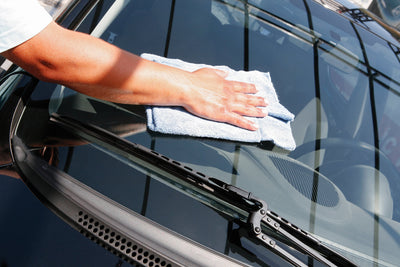
- Gently wipe in one direction with a soft, edgeless microfiber towel. Use light pressure, think of gliding the towel, not scrubbing. A soft, edgeless microfiber towel helps avoid scratching the coating. Fold the towel to a clean face for each pass so you are not redistributing grit. One direction only; back-and-forth motion can trap particles.
- Rinse thoroughly and dry the panel. After rinsing, observe how water behaves on the area. On a healthy coating, water should still bead and sheet off. If the area suddenly looks flat or water clings in a patch, that is an early sign the coating may be contaminated or compromised, note it and reassess after the surface is fully dry.
What to Use and What to Avoid on Your Coating
Use a pH-neutral product designed for coated surfaces. Liquid Armour USA's Decon+ Prep & Maintenance Foam Wash is 100% free of wax, silicone, and dyes, and it is intended for cars, boats, RVs, motorcycles, and aircraft. Pair it with a soft, edgeless microfiber towel such as the 16"x16" Ultra Edgeless Microfiber Towels in blue, which are designed to be used to level and buff after ceramic coating.


Avoid harsh household cleaners, abrasive pads, and strong solvents, which can dull the coating over time. Also avoid a heat gun or aggressive solvent on a stubborn deposit, since both can cause more harm than the dropping itself.
The steps below summarise the fresh-dropping removal process and how long each stage takes.
| Step | What to do | Time or frequency |
|---|---|---|
| Rinse first | Flood the area with plain water from a hose | Before any wiping |
| Apply foam wash | Use a pH-neutral foaming wash | 3-5 minutes dwell |
| Gentle wipe | Wipe in one direction with an edgeless microfiber towel | Light pressure, fresh towel face each pass |
| Rinse and dry | Rinse thoroughly and check water beading | After every cleaning |
How to Remove Dried Bird Poop from Car Paint and Coating
Dried droppings take more patience. The goal is to soften the residue, not force it off. Once a deposit has baked on, it can bond to the coating and become hard enough that a dry wipe will only scratch the surface or push the residue deeper.
- Soak the area with a pH-neutral foaming wash and cover it with a damp microfiber towel for several minutes. The towel holds moisture against the deposit and rehydrates it evenly. Keep the towel saturated; if it dries out, re-wet it. For very stubborn deposits, you can place a second damp towel on top to slow evaporation.
- Let the product dwell, then gently lift the softened residue with light wiping motions. Use a fresh face of the towel for each pass and work in one direction. Do not increase pressure, if the residue is not lifting, it needs more dwell time, not more force.
- Repeat if needed rather than increasing pressure. Two or three gentle passes with adequate dwell time work better than one hard scrub. Between passes, rinse the area so you can see what remains.
- Rinse and dry thoroughly. After drying, inspect the area under good light from several angles. If a mark remains, move to the decision tree below to determine whether it is residue, contamination, or etching.
Safe Handling of Stubborn Deposits
Some dried droppings leave a hard, cement-like residue that resists normal washing. Test any new product on a small, inconspicuous panel first and rinse thoroughly afterward.
If the residue still refuses to lift after two or three soak-and-wipe cycles, do not reach for a polisher yet. The next step is to determine whether the mark is contamination on the coating or etching in the clear coat. Premature polishing can remove coating material and may not address the underlying issue.
Bird Dropping Etching on Car Paint: How to Tell If It Has Happened
Etching is a chemical mark that remains after the dropping is gone. It often shows up as a dull ring or a slightly rough spot that you can feel with your fingertip. Etching is more likely when droppings sat in direct sun for a long time.
A quick check: after cleaning, inspect the area under good light from several angles. If the mark is still visible and does not wipe away with a detailer, the surface may be etched rather than simply dirty.
Decon+ Prep & Maintance Foam Wash 16oz. →
Residue, Coating Contamination, or Etching: A Decision Tree
Use this simple guide to decide what you are dealing with:
- Mark wipes off with a foam wash? It was residue. Keep cleaning regularly.
- Mark stays after cleaning but feels smooth? It may be coating contamination. Try a fresh wash and a detailer.
- Mark stays and feels rough or dull? It may be etching in the clear coat.
If you are unsure, a professional detailer can assess the surface before you try anything aggressive.
How to Fix Bird Poop Damage on Car Paint
Minor residue can usually be handled with cleaning alone. If a mark persists, a light polish or paint correction step may be needed. These steps are more involved and can remove material if done incorrectly, so take care.
Pay attention to the following:
- Work on a small area first to test your technique.
- Use a fine polish rather than an aggressive compound.
- Avoid heavy pressure and high-speed machines on a coated surface.
When a mark is deep, or when the coating itself appears damaged, the right fix may involve professional correction and a recoat. In those cases, consult a qualified installer rather than attempting a repair you are not confident about.
Protecting the Coating After Removal and Next Steps With Liquid Armour USA
Once the surface is clean, protecting it helps prevent the next problem. Liquid Armour USA's Quick Shine Nano Detailer is designed to help maintain and rejuvenate a ceramic coating, aid drying, and add gloss after washing. It can also be used as a waterless wash and shine.

Ceramic coating lifespan depends on how the vehicle is maintained and how often it is exposed to contaminants. You can read how long nano ceramic coating lasts to plan when to reapply.
For the best results, keep up a regular wash routine and respond quickly to any new deposit. If you want help finding a qualified installer for repair or recoating, you can find an installer through the Liquid Armour USA installer network.
Frequently Asked Questions
How do you safely remove bird droppings from a ceramic-coated car?
Rinse the area with plenty of water first to loosen the deposit and avoid dragging grit across the surface. Then use a pH-neutral car wash soap, such as a ceramic-safe formula, and a soft microfiber wash mitt, working in straight lines rather than circles. Rinse thoroughly, dry with a clean microfiber towel, and inspect the panel. Avoid scrubbing hard, using abrasive pads, or relying on harsh solvents, since these can wear the coating over time.
Will Dawn dish soap remove ceramic coating?
Dawn is a strong degreaser and can strip wax, sealants, and some of the slickness that a ceramic coating provides. Repeated use can reduce hydrophobic performance over time. For routine washing and for cleaning bird droppings, use a pH-neutral car wash soap designed for coated surfaces, and reserve stronger products for specific decontamination needs. Pair your wash routine with a maintenance product such as Liquid Armour USA's Decon+ Prep & Maintenance Foam Wash for coating-safe cleaning.
Can bird droppings etch through ceramic coating?
Bird droppings are acidic and can etch a ceramic coating if they sit for an extended period, especially in hot sun. A coating can be damaged, and the underlying clear coat may be affected if the deposit is left long enough. Removing droppings quickly is the most effective way to prevent this. If a mark remains after careful cleaning, assess whether it is residue on the coating or etching that has affected the surface before choosing a repair method.
What should you do if a bird dropping leaves a mark after cleaning?
First, rewash the area with a pH-neutral soap and dry it fully to confirm whether the mark is residue or surface damage. If the mark remains, inspect it under good light from several angles. Residue often wipes away with a gentle maintenance cleaner, while etching feels smooth but looks dull or ghosted. If the mark persists after a second careful cleaning, it is likely etching, and professional paint correction or coating inspection may be needed.