
Benefits of Hydrophobic Glass Coating for Showers
Last Updated: November 24, 2026
Quick Summary
A hydrophobic glass coating makes water bead and roll off shower glass instead of drying in place, so water spots, hard-water deposits, soap scum and body oils have far less chance to form. Cleaning frequency and time both drop, and glass clarity holds up longer.
- Apply in four steps: deep clean, remove mineral film, coat evenly, then cure undisturbed.
- A hydrophobic coating on shower glass typically lasts from several months to a few years.
- Harder water builds mineral film faster, so the coating needs recharging more often.
- Squeegee after every shower and use pH-neutral cleaners to preserve the coating.
- Coat the glass, not the shower floor, and use a bath mat for slip safety.
Table of Contents
- What Are the Benefits of Hydrophobic Glass Coating for Showers?
- How Water Repellency and Beading Keep Shower Glass Cleaner
- How to Make Shower Glass Hydrophobic
- How Long Does Hydrophobic Coating Last on Shower Glass?
- Best Water-Repellent Coating for Shower Glass: What to Compare
- Cleaning Coated Shower Glass Without Wearing It Down
- Realistic Limits: Water Hardness, Soap Scum, and What a Coating Won't Fix
- Pick Your Coating and Protect the Glass You Already Have
- Frequently Asked Questions
What Are the Benefits of Hydrophobic Glass Coating for Showers?
The benefits of hydrophobic glass coating for showers come down to one principle: water stops sticking to the glass, so everything carried in that water slides off with it. A hydrophobic glass coating is a thin, invisible film that lowers surface tension on shower doors, forcing water to bead and roll away instead of drying in place.
Nano-ceramic coatings are designed for this kind of surface protection, and shower glass is one of the clearest demonstrations of how the technology works.
Here is what that means in daily use:
- Water spots and hard-water deposits have far less chance to form, because droplets leave before minerals can dry onto the surface.
- Soap scum and body oils struggle to bond to a slick, low-energy surface, so they rinse away instead of baking on.
- Cleaning frequency and time both drop. A quick squeegee replaces scrubbing.
How Water Repellency and Beading Keep Shower Glass Cleaner
Water beading is the visible proof that a coating is working. On untreated glass, water spreads into a flat sheet because the surface pulls at it.
That beading action does the cleaning for you. Each droplet that rolls off carries loose minerals, soap residue, and oils with it, so fewer deposits are left to dry.
The same slick surface fights soap scum and body oils directly.
How to Make Shower Glass Hydrophobic
Making shower glass hydrophobic takes four steps: clean the glass completely, remove mineral film, apply the coating evenly, and let it cure undisturbed. Skipping preparation is the most common reason a coating fails early.
- Deep clean the glass. Use a dedicated glass cleaner and a non-scratching pad to strip soap film and body oils, especially in bottom corners where scum collects.
- Remove hard-water deposits. A mineral-dissolving cleaner handles calcium and magnesium buildup. If the glass feels rough, deposits remain.
- Dry and inspect. Wipe dry with a microfiber cloth and check at an angle in good light. Any haze left now gets sealed in.
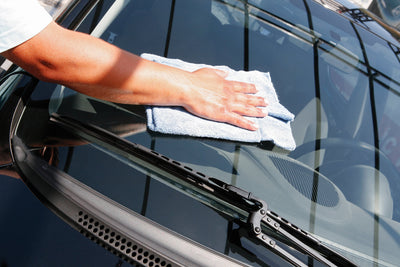
- Apply the coating. Work in small sections, spread evenly, and buff off excess before it flashes. Follow the cure time exactly and keep the enclosure dry during curing.
Watch out: applying over a warm surface or in a steamy bathroom causes the coating to flash too fast and leave streaks that are difficult to level out.
For a full walkthrough of the application process on shower doors, see this step-by-step ceramic coating guide.
How Long Does Hydrophobic Coating Last on Shower Glass?
A hydrophobic coating on shower glass typically lasts from several months to a few years, depending on product type, water hardness, and household use. A spray sealant sits at the short end; a semi-permanent nano-ceramic coating sits at the long end. Test performance rather than trust a label.
What durability actually means on shower glass
Durability is not one number. On a shower enclosure, a coating has to survive four stresses at once:
- Water exposure. Every shower floods the film with water and dissolved minerals. The coating sheds most of it, but the fraction that stays behind slowly deposits on the surface.
- Abrasion from cleaning. A squeegee blade, microfiber cloth, and non-scratching pad all contact the film. Repeated contact is the fastest way to thin a coating.
- Chemical exposure. Soap, shampoo, body wash, and cleaners sit on the surface for minutes at a time. pH-neutral products are gentle; acid descalers and harsh alkaline cleaners are not.
A coating that beads well on day one can still wear faster if the cleaning routine is abrasive, so read lifespan claims as conditional on care.
A transparent way to test durability at home
You do not need a lab to get a useful read on how a coating is holding up:
- Pick a fixed test spot on the glass, ideally a lower corner that sees regular water.
- Measure the contact angle informally. Spray a fine mist and photograph it from the same distance and angle each time. Tight, round beads indicate strong hydrophobicity; flattened droplets indicate the film is wearing.
- Time the roll-off. Fast roll-off with a clean trail means the coating is still working; slow, streaky movement means it is time to recharge.
- Log the date and result. Repeat monthly; the trend line tells you more than any single reading.
This is the same logic behind a standard hydrophobicity test, scaled down for a homeowner. It will not give you a laboratory contact-angle number, but it tells you when reapplication is genuinely due rather than when a product schedule says so.
How water hardness changes the lifespan
Water hardness is the variable most homeowners underestimate. Hard water carries dissolved calcium and magnesium that do not evaporate with the water; they stay on the glass and coating as a film.
- Soft water leaves little mineral residue, so a quality semi-permanent coating can approach the long end of its rated life with routine squeegeeing.
- Moderately hard water is the common case. Expect a maintenance top-up before a full reapplication, and visible spotting if you skip daily squeegeeing.
- Very hard water is the hardest case. Mineral film can accumulate faster than the coating sheds it, so even a well-applied film needs more frequent attention. A coating reduces descaling frequency but does not remove the need for it.
Check your water hardness with a test strip or a municipal water report. Knowing the number lets you set realistic expectations instead of blaming the product for a water-quality problem.
Shower traffic and cleaning habits
A family of four asking one coating to handle daily use will see it degrade faster than a guest bathroom that runs twice a week. That is arithmetic, not product failure: more showers mean more water, more soap, and more cleaning contact.
Cleaning habits matter just as much. Abrasive powders, scouring pads, and acid-based descalers left to dwell will strip protection quickly, while a squeegee after each shower and a pH-neutral cleaner preserve it.
Watch out: a coating that looks dull or stops beading in one area while the rest of the glass still performs usually means that spot was cleaned with something abrasive, not that the whole coating has failed.
Reading lifespan claims critically
When a product claims a multi-year lifespan, ask what test produced that number. A laboratory abrasion test and a real shower enclosure are very different environments; a controlled wipe test tells you the film resists a standardized cloth, not how it behaves after a year of hard water and weekly cleaning.
Treat any lifespan claim as an upper bound under favorable conditions, then discount it for your water hardness, household size, and cleaning routine.
Best Water-Repellent Coating for Shower Glass: What to Compare
The best water-repellent coating for shower glass is the one that matches your durability needs and maintenance habits, not simply the most expensive bottle. Compare four things before you buy: coating type, expected lifespan, ease of application, and how the product behaves on glass specifically.
| Coating Type | Expected Lifespan | Application Effort | Best For |
|---|---|---|---|
| Spray synthetic sealant | Months | Low, wipe on and buff | Renters, quick top-ups |
| Multi-surface nano coating | Months to a year | Low to moderate | Glass plus tile, fixtures |
| Semi-permanent 9H ceramic | Up to a few years | Moderate, needs curing | Homeowners wanting long protection |
| Hydrophilic coating | Varies | Moderate | Anti-fog rather than repellency |
Two distinctions matter. A hydrophilic coating is the opposite approach: it spreads water into a sheet to reduce fogging, so it does not deliver the beading and stain resistance a hydrophobic coating does. Checking that the product is intended for glass helps ensure a hydrophobic glass coating suits the shower surface and the water-repelling approach you want.
For a closer look at how the two main bathroom options differ, this ceramic coating vs glass sealant comparison breaks down the trade-offs.
Cleaning Coated Shower Glass Without Wearing It Down
Cleaning coated shower glass comes down to one rule: lift dirt without abrading the film. A squeegee after every shower and a soft cloth with a mild cleaner once a week will keep most coatings performing far longer than aggressive scrubbing.
-
A squeegee for daily wipe down
-
Microfiber cloths for drying and buffing
-
pH-neutral or coating-safe cleaners
-
Abrasive powders and scouring pads
-
Acid-based descalers left to dwell on the coating
-
Harsh alkaline cleaners that degrade the film
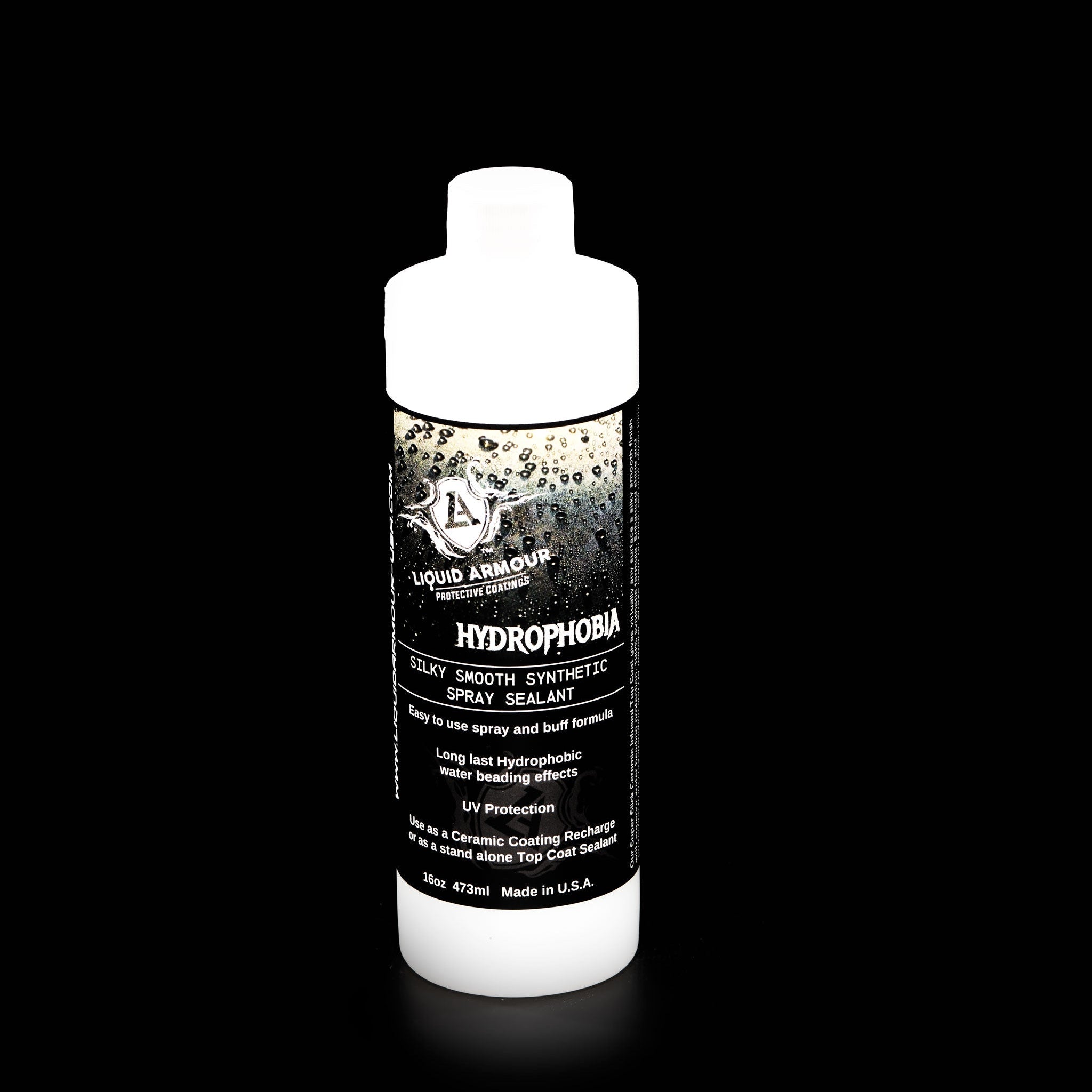
A ceramic-infused sealant used as a maintenance top-up helps coatings last longer while adding back slickness. The HYDROPHOBIA synthetic sealant is formulated as a gentle recharge that will not strip existing protection, making it a practical option between full reapplications.
Realistic Limits: Water Hardness, Soap Scum, and What a Coating Won't Fix
A coating is a maintenance tool, not a permanent shield. It slows the buildup of hard-water deposits, soap scum, and staining, but does not eliminate them, and it will not repair glass that is already etched or cloudy.
Where performance drops
- Very hard water leaves mineral film faster than any coating can shed it. Expect shorter lifespan and more frequent top-ups; a coating changes the job from descaling to routine wiping rather than removing it.
- Heavy soap users generate more scum load, so the surface needs more frequent cleaning even when protected. Bar soap leaves more residue than liquid body wash.
- Existing damage is permanent. Etching from years of untreated hard water is a change to the glass itself, and a coating over it will not restore clarity. If the glass feels rough or looks permanently hazy after cleaning, the damage is in the glass, not on it.
Cost and value over time
The upfront cost of a coating is easy to see; the value is in what it replaces.
- DIY cost. A consumer-grade spray sealant typically runs in the low tens of dollars per bottle and covers an enclosure for a few months. A semi-permanent ceramic kit generally runs from roughly the high tens to the low hundreds of dollars, depending on size and included preparation products.
- Professional installation. A professionally applied coating on a shower enclosure commonly falls in the low hundreds of dollars, driven by enclosure size, glass condition, and local labor rates.
- Maintenance savings. Savings come from reduced cleaning labor and fewer replacement cleaning products. If a coating cuts weekly scrubbing time and extends the interval between deep descalings, labor savings alone can offset a DIY kit within a year for many households.
The trade-off is real. A coating is not automatically a savings; it is a savings when the cleaning labor it displaces is worth more to you than the product and reapplication cost.
Safety and slip risk
Some coatings increase surface slickness, and a wet, coated shower floor can be more slippery than an untreated one. Coat the glass, not the floor, and use a bath mat.
Application safety matters too. Follow the product's ventilation and curing instructions, apply in a well-ventilated space, and keep the enclosure dry for the full cure time. If a product's safety claims are unclear, check the manufacturer's safety data sheet.
Compatibility with glass types and existing treatments
Not every shower enclosure is bare glass. Factory-coated glass, tempered glass, and previously treated glass all behave differently, and preparation requirements change accordingly.
- Factory-coated glass may already have a hydrophobic or easy-clean layer. A new coating can work over it, but the surface must be cleaned thoroughly and the product confirmed compatible with factory finishes.
- Tempered glass is standard in shower enclosures and accepts most coatings well, provided the glass is clean and dry before application.
- Previously treated glass needs the old coating removed or fully degraded first. Layering a new coating over a failing one usually produces uneven performance.
If you are unsure what your glass has on it, test a small inconspicuous area first. A coating that beads unevenly or streaks in one spot is telling you the surface is not ready.
Pick Your Coating and Protect the Glass You Already Have
Choosing a coating means matching the product to the surface and the commitment level you are ready for.
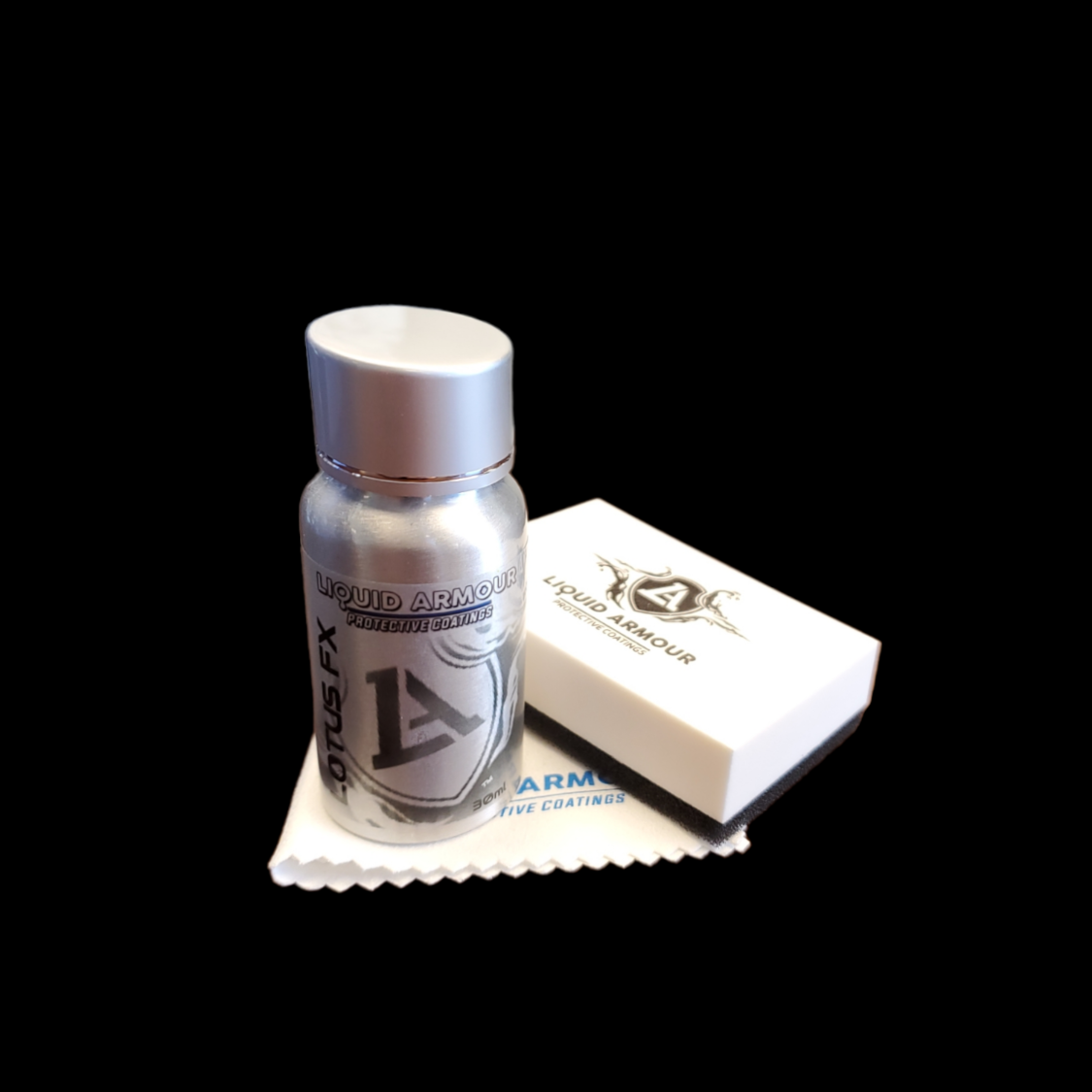
For shower glass, the LOTUS FX 9H ceramic glass coating kit is one option to consider.
For a lighter, multi-surface option, the Nano Coat line applies by dip, wipe, or spray and is optically clear, so it suits glass, fixtures, and surrounding surfaces in one pass.
Shower glass that stays clear takes less work than glass you fight every week.
Frequently Asked Questions
Does hydrophobic glass coating prevent hard-water stains on shower glass?
It slows them down rather than stopping them completely. A hydrophobic glass coating lowers surface tension so water beads and runs off before minerals can settle, which means far fewer hard-water deposits and much easier removal when they do appear. In areas with very hard water, expect a visible film to build over months of daily showering. Wiping the glass down after use and recharging the coating periodically keeps mineral buildup to a minimum.
How long does a hydrophobic coating last on shower glass?
Durability depends on the product type and how the shower is used. Semi-permanent nano-ceramic coatings are designed to last when maintained correctly, and their actual lifespan varies with water hardness and cleaning habits. Daily use, hard water, and harsh cleaners shorten lifespan. Abrasive scrubbing pads and acidic descalers wear a coating fastest, so mild soap and a microfiber cloth protect your investment.
Can I apply a water-repellent coating to shower glass myself?
Yes. Most consumer coatings are wipe-on or spray-on and take minutes per panel. Clean the glass thoroughly first, remove any existing soap scum or mineral film, then apply in thin, even passes and let it cure per the label. Skipping surface preparation is the most common reason coatings fail early. For a semi-permanent ceramic product, work in a well-ventilated bathroom and allow the full curing time before the shower is used again.
Is coated shower glass slippery or a safety risk?
The coating is applied to the glass panels and doors, not the shower floor, so it does not change slip risk where you stand. Treated glass itself feels the same to the touch. The main practical safety note is ventilation during application, since solvent-based products give off fumes while curing. Keep the bathroom aired out and follow the label's dry time before anyone showers.