
How to Test Ceramic Coating Hydrophobicity at Home
Last Updated: November 14, 2026
Quick Summary
You can test ceramic coating hydrophobicity at home by washing one panel, spraying two fixed 6-inch squares with distilled water from 6 to 8 inches away, and timing how quickly the water beads and sheets. Grade each square on a 1-to-5 scale and log the results. Clean the panel and retest before concluding the coating has failed.
- Use distilled or filtered water, since tap water leaves mineral rings that can look like coating failure.
- Test only when the panel is cool, within about 10°F of ambient air, because hot paint flashes water off faster.
- Spray two pumps per 6-inch square from 6 to 8 inches away, keeping volume and distance the same every time.
- Sheeting under 5 seconds is fast; over 15 seconds is slow, so time it when you tilt the panel about 15 degrees.
- Wait 24 hours after any spray wax, drying aid or sealant topper before testing, since those add their own hydrophobic layer.
Table of Contents
- What Hydrophobicity Means and Why It Changes Over Time
- Preparing the Surface and Your Safety Checklist
- Step-by-Step: Running a Controlled Ceramic Coating Water Beading Test
- Water Beading vs. Water Sheeting: What Each Result Tells You
- How to Tell If Ceramic Coating Is Still Working
- Why Your Ceramic Coating Is Not Hydrophobic Anymore
- Tracking Results Over Time and Booking Your Next Step
- Frequently Asked Questions
Water beading is the fastest way to check whether a ceramic coating is still doing its job, and you can measure ceramic coating hydrophobicity in your own garage with a hose, a bucket and about ten minutes. This guide walks you through a repeatable home test, explains what the results actually mean, and shows you how to tell coating failure apart from simple dirt. A coating can look dull or spotty while the underlying film is still intact.
SAE International guidance on vehicle paint and surface finish testing
What Hydrophobicity Means and Why It Changes Over Time
Hydrophobicity is the surface's ability to repel water. On a coated panel, water tends to form tight, round droplets instead of spreading into a flat film.
Ceramic coating hydrophobicity does not stay at one level. Road grime, wash chemicals, bird droppings and mineral deposits all build up over time and can coat the surface, making it feel like the protection has worn away.
The result is that a coating can be fine underneath while the surface behaves as if it is not. That is why a simple test needs to account for contamination first.
Preparing the Surface and Your Safety Checklist
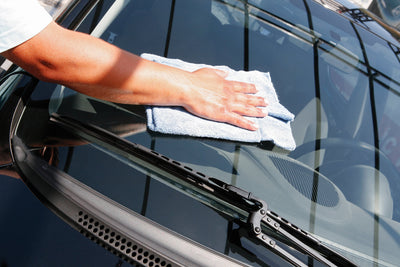
Start with a clean panel. Wash the area with a pH-neutral car shampoo and a clean wash mitt, then rinse well. Dry it with a soft microfiber towel. Test one panel at a time so your results can be compared.
Use this checklist before you begin:
- Pick a shaded spot, away from direct sun and heat
- Wait until the panel is cool to the touch
- Have clean water in a bucket, not a hose spray that carries minerals
- Wear nitrile gloves to keep oils off the surface
- Use a clean, dry microfiber towel only
- Keep a notepad or phone ready to record results
- Avoid harsh solvents or abrasives on the test area
Paint-care safety matters here. Do not scrub the panel with a dry towel, and never use a strong degreaser during the test, since it can strip the coating you are trying to measure.
Step-by-Step: Running a Controlled Ceramic Coating Water Beading Test
Most home tests fail because the conditions change between panels. A controlled protocol fixes the variables so you can compare results over time instead of guessing. Use the same water, the same distance, the same light and the same observation window every time.
Set the test conditions first.
- Water quality: Use distilled or filtered water in a clean spray bottle. Tap water carries calcium and magnesium that leave mineral rings and can make a healthy coating look spotty. If you must use a hose, run it through a filter and note that in your log.
- Panel temperature: Test when the panel is cool to the touch, roughly within 10°F of ambient air. Hot paint flashes water off faster and inflates your sheeting reading.
- Lighting: Work in shade or indirect light. Direct sun hides flat beads and makes tight beads look larger than they are. A bright LED work light held at a low angle reveals bead height and contact shape.
- Spray distance and volume: Hold the bottle 6 to 8 inches from the panel and give two full pumps over a 6-inch square. The same distance and volume on every panel keeps droplet size comparable.
- Observation window: Start a timer the moment water lands. Record bead appearance at 5 seconds, sheeting behavior at 15 seconds, and whether any water remains at 60 seconds.
Run the test in this order.
- Wash and dry the panel. Use a pH-neutral shampoo and a clean microfiber. Dry completely, standing water dilutes the test.
- Mark your test squares. Use painter's tape to outline two 6-inch squares on the same panel, one upper and one lower. Testing the same fixed locations each time removes panel-to-panel variation.
- Apply the measured spray. Two pumps per square from 6 to 8 inches, top to bottom, at the same pace.
- Observe at 5 seconds. Note bead shape (round vs. flat), bead uniformity, and whether beads merge into puddles. Photograph straight-on and at a low angle.
- Tilt and time sheeting. Raise one edge of the panel or hood about 15 degrees. Time how long water takes to clear the square. Under 5 seconds is fast sheeting; over 15 seconds is slow.
- Check the 60-second residue. Look for any water left as a film or in patches. Patchy residue points to contamination or wear; uniform clearing points to a healthy surface.
- Repeat on the second square and log both. If the two squares disagree by more than one bead grade, clean and retest before drawing a conclusion.
Grade each square on a simple 1-to-5 scale so your log is comparable month to month: 5 = tight round beads, fast sheeting, no residue; 4 = round beads, slight flattening, fast sheeting; 3 = mixed beads, moderate sheeting; 2 = flat beads, slow sheeting, some residue; 1 = water films or clings, no beading. Record the grade, the sheeting time and a photo for each square.
Watch out: Do not test within 24 hours of applying a spray wax, drying aid or sealant topper, those products add their own hydrophobic layer and will read as coating performance when they are not. Also avoid testing on a panel that just came out of direct sun or a hot engine bay; the temperature skew alone can drop a grade.
SAE International guidance on vehicle paint and surface finish testing
The test is easier to repeat and compare when you keep the key conditions fixed. The table below lists them.
| Condition | Target | Why it matters |
|---|---|---|
| Water | Distilled or filtered | Tap water leaves mineral rings |
| Panel temperature | Within 10°F of ambient | Hot paint flashes water off faster |
| Spray distance | 6 to 8 inches | Keeps droplet size comparable |
| Spray volume | Two pumps per 6-inch square | Same volume on every panel |
| Sheeting time | Under 5 s fast, over 15 s slow | Sets the sheeting benchmark |
| Wait before testing | 24 hours after any topper | Toppers add their own hydrophobic layer |
Water Beading vs. Water Sheeting: What Each Result Tells You
Water beading and water sheeting describe two different behaviors, and both tell you something useful.
Beading means water forms separate round droplets. Tight, uniform beads usually show a healthy hydrophobic surface. Large, flat, loose beads can mean the surface is starting to lose its repellency.
Sheeting means water spreads into a thin film that slides off in sheets as the panel is tilted. Sheeting is a sign that the surface is still slick, even if beading looks weaker. A coating that sheets well often performs well, even when the droplets are not perfectly round.
Use both observations together. Strong beading with fast sheeting is a good sign. Weak beading with slow sheeting points to contamination or early coating wear.
How to Tell If Ceramic Coating Is Still Working
Look at three things together: beading, sheeting and surface feel.
- Beading: Are droplets tight and round, or flat and spread out?
- Sheeting: Does water leave the surface quickly when tilted?
- Slickness: Does the paint feel slick to the touch after rinsing?
If all three look strong, the coating is most likely still working. If one or two are weak, clean the panel again before deciding. Many people judge a coating too quickly after a dusty week. For a closer look at how long a coating should last under normal use, see how long nano ceramic coating lasts.
Consumer Reports guidance on maintaining car paint protection
Why Your Ceramic Coating Is Not Hydrophobic Anymore
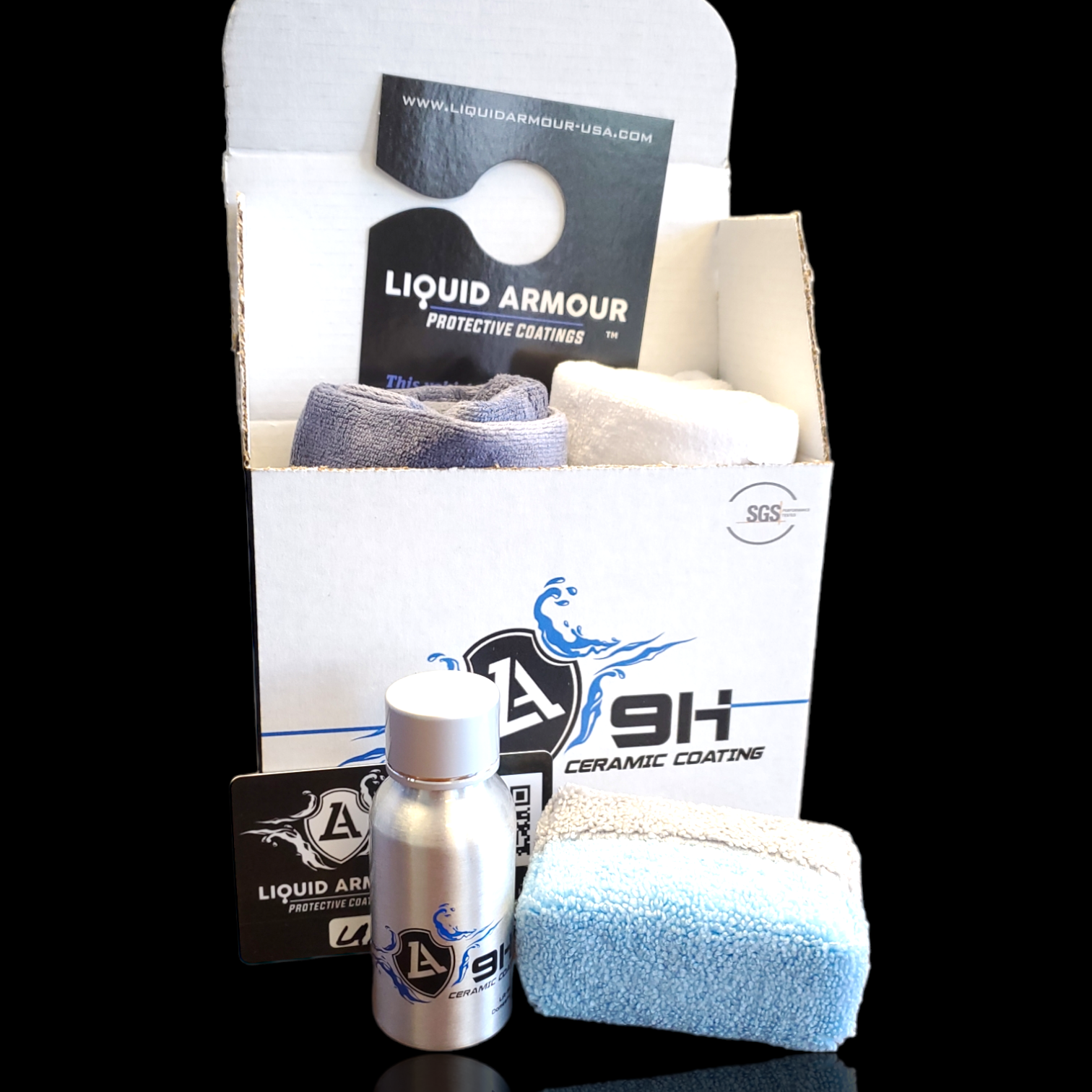
When beading drops, owners usually jump to 'the coating failed.' If your coating has lost its water-repelling effect, you can reapply with a professional-grade ceramic kit to restore it.
Step 1: Rule out wash residue and toppers.
Re-wash one test square with a pH-neutral shampoo, rinse with distilled water and dry. If beading returns, the cause was soap film, a drying aid or a spray wax layered on top.
Step 2: Rule out bonded contamination.
If washing does not restore beading, the surface likely has bonded road film, tree sap or industrial fallout.
Step 3: Rule out mineral deposits.
Hard water spots and calcium deposits etch a dull pattern that repels water unevenly. Look for rings or chalky patches under low-angle light.
Step 4: Confirm coating wear.
If beading stays weak after washing, iron removal, claying and mineral removal, the coating itself has likely thinned or degraded. This is the true end of the coating's service life.
Common misdiagnoses to avoid.
- Assuming failure after one dusty week. Dust and road film mask beading fast. Always wash before judging.
- Blaming the coating for a topper conflict. A spray sealant on top of a coating can read weaker than the coating alone once it starts to fail.
- Over-claying a healthy coating. Clay only when the baggie test or iron remover indicates bonded contamination; unnecessary claying adds marring risk.
- Testing hot paint. Heat alone flattens beads and shortens sheeting time, which reads as failure when nothing has changed.
Automotive Refinishing guidance on paint surface inspection
Tracking Results Over Time and Booking Your Next Step
One test tells you little. Record your results on the same panel every few months under the same conditions. Note the bead size, sheeting speed and any change after washing. Over time, this log shows whether the coating is holding steady or fading.
If your results show steady decline even after proper cleaning, it may be time to reapply. Compare what professional application costs per vehicle in our 2026 cost guide before you decide whether to do it yourself or hire an installer.
Find an installer near you and start with a clean, well-tested panel.
Frequently Asked Questions
Does water beading prove that a ceramic coating is still working?
Not on its own. Beading shows that water is still repelled at the surface, but dirt, road film, soap residue or mineral deposits can mask the coating and make it look weaker or stronger than it is. Clean the panel thoroughly with a decontamination wash, dry it, and then run the water test under the same conditions each time. If beading is tight and water sheets off quickly, the coating is likely performing. If beading is flat or absent after a clean surface test, the coating's hydrophobic properties have probably declined.
Should I test ceramic coating hydrophobicity on a clean, dry car?
Yes. Test on a clean surface that is dry or only lightly damp, because contamination and leftover soap are the most common reasons a coating appears to fail. Wash with a pH-neutral car shampoo, rinse thoroughly, and dry the panel with a clean microfiber towel before you spray. Test in shade at a moderate temperature so the water does not evaporate before you can observe the beads. Using the same method on each panel makes comparisons across the vehicle meaningful.
What is the difference between water beading and water sheeting?
Beading is the formation of separate, rounded droplets on the surface, and it indicates the coating is repelling water. Sheeting is when water spreads into a flowing film that slides off the panel, which indicates a slicker, lower-friction surface with strong water runoff. A coating can bead well but sheet poorly, so checking both gives a fuller picture of Liquid Armour 9H performance. Both results are most meaningful when the surface is clean and tested under identical conditions.
Why is my ceramic coating not beading water?
The most common cause is contamination, such as road film, bonded grime, or soap residue, which masks the surface. Decontaminate first, then retest. If the panel is still flat after a clean surface test, check whether the coating was properly prepped and cured during application, and whether a maintenance product, polish or wax has been used since.