
7 Ceramic Coating Maintenance Packages Explained
Last Updated: October 29, 2026
Quick Summary
Ceramic coating maintenance packages are tiered service plans that keep a coating's hydrophobic layer alive through scheduled washes, decontamination and inspections. Most programs use three tiers: Essential monthly wash and inspection, Mid-Tier quarterly decontamination with booster, and Full annual decontamination and top-coat reset. Each tier matches a different contamination level and budget.
- The Essential tier is a monthly pH-neutral wash plus a walkaround inspection of beading and sheeting.
- Use a topper from the same manufacturer as the base coating and avoid wax, silicone or dyes.
- Wash in shade and one section at a time, because soap flash-drying on a hot panel can etch the coating.
- Warranty coverage depends on documented maintenance, and most failures trace back to missed service rather than product defects.
- Match the package to how the vehicle is used, not to its price tag.
Table of Contents
- Why Ceramic Coating Maintenance Packages Exist
- What Each Maintenance Package Tier Includes
- Your Ceramic Coating Maintenance Wash Steps
- Where Iron and Fallout Remover Fits in the Schedule
- Ceramic Coating Warranty Requirements You Must Meet
- Running the Numbers on a Maintenance Package
- Winter Maintenance and Environmental Damage Troubleshooting
- Choosing the Right Maintenance Package for Your Vehicle
- Frequently Asked Questions
Why Ceramic Coating Maintenance Packages Exist
A ceramic coating is a semi-permanent SiO2 layer that bonds to paint and forms a hydrophobic shield, but that shield degrades without care. At Liquid Armour USA, we tell every shop owner the same thing: the coating is the easy sale, and the maintenance plan is what keeps the customer for years.
Three forces make maintenance packages necessary. First, environmental contaminants bond to any surface over time, and once iron particles embed in the top layer, they bleed rust into the finish. Second, warranty terms almost always require documented upkeep, so a customer who skips maintenance can void coverage. Third, a coating's hydrophobicity fades gradually rather than failing all at once, and most owners never notice until water stops beading.
A maintenance package turns that slow decline into a scheduled service. It also gives your shop recurring revenue instead of one-time labor. Below, we break down each tier, the wash steps that protect the coating, and how to price the whole thing.
What Each Maintenance Package Tier Includes
Most professional maintenance programs fall into three tiers, and each one answers a different level of contamination and budget. Here is how we structure them, plus the compatibility rules that keep a booster from fighting the coating underneath it.
| Tier | Frequency | Core Services | Best For |
|---|---|---|---|
| Essential | Monthly | pH-neutral wash, inspection, drying aid | Garage-kept daily drivers |
| Mid-Tier | Quarterly | Decontamination wash, iron removal, booster | Outdoor-parked vehicles |
| Full | Annual | Full decontamination, top-coat reset, inspection | High-value and show vehicles |
Essential Tier: Wash and Inspection
The entry tier is a careful maintenance wash plus a walkaround inspection. Technicians check beading and sheeting on horizontal panels, look for water spotting, and note any micro-marring from improper washing. The value is consistency: a monthly touch point that catches problems early.
Mid-Tier: Decontamination and Booster
A quarterly decontamination service can suit vehicles that sit outside, commute on highways, or park near rail lines and industrial dust.
Full Tier: Annual Reset and Top-Coat
Once a year, the vehicle gets a full decontamination, a clay bar treatment where needed, and a top-coat application to renew the hydrophobic layer. The annual inspection also documents coating condition for warranty validation. We use Liquid Armour Nano Coat for this reset because it rebuilds the protective layer the coating has slowly lost.
The compatibility rule most guides skip
A booster is only as good as its compatibility with the base coating. Two failure modes show up repeatedly. First, a wax- or silicone-based topper layered over a ceramic coating can mask the hydrophobic layer and confuse the next inspection, the surface beads, but the coating underneath is not actually being maintained. Second, mixing brands with different solvent carriers can cause the topper to flash unevenly or leave a streaky haze that needs polishing out. The safe rule: use a topper from the same manufacturer as the base coating, or one the manufacturer explicitly lists as compatible, and avoid any product containing wax, silicone, or dyes on a coated surface. When in doubt, test on a small inconspicuous panel and check for hazing before applying to the whole vehicle.
Match the tier to the vehicle, not the budget
A common mistake is selling the full tier to every customer.
Your Ceramic Coating Maintenance Wash Steps
Follow these ceramic coating maintenance wash steps in order to help protect the finish. Skipping a step can risk micro-marring or water spotting.
- Pre-rinse with a pressure washer to lift loose dirt and reduce contact risk.
- Foam the vehicle with a pH-neutral shampoo. We recommend DECON+ Prep and Maintenance Foam Wash because it is free of wax, silicone, and dyes.
- Contact wash using the two-bucket method with grit guards, working top to bottom.
- Rinse with filtered water to reduce mineral spotting.
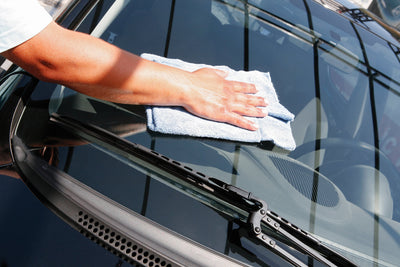
- Dry with a high-density microfiber towel and a drying aid to prevent streaks.
- Inspect beading, sheeting, and any new defects.
Watch out: washing a hot panel in direct sun causes the soap to flash-dry and etch the coating. Work in shade and one section at a time.

Where Iron and Fallout Remover Fits in the Schedule
Iron and fallout remover is typically used as part of decontamination rather than in every wash. Bonded iron particles from brakes and rail dust can embed in a coating's top layer.
Apply an iron and fallout remover to a cool, wet surface, let it dwell until it turns purple, then rinse thoroughly before it dries.
Ceramic Coating Warranty Requirements You Must Meet
Warranty coverage on a ceramic coating depends on documented maintenance, and most failures trace back to missed service rather than product defects. Typical ceramic coating warranty requirements include:
- Washing at the interval the installer specifies, usually every two to four weeks
- Using pH-neutral products only, with no wax or silicone
- Attending scheduled annual inspections
- Avoiding automatic brush washes and harsh detergents
- Keeping service records the shop can verify
Read the actual warranty document before you promise a customer anything. Terms vary by manufacturer, and a shop that cannot produce records may lose a claim.
Quick Shine Nano Detailer (1 Gallon) →
Running the Numbers on a Maintenance Package
Here is a framework for pricing a maintenance program and showing its value to the customer.
Build the per-visit cost first
Start with three inputs: labor hours per visit, product cost per visit, and your loaded shop rate. Multiply hours by your loaded rate, add product cost, then add your target margin. That is your per-visit price floor.
Model the annual package price
Once you have per-visit cost, multiply by frequency and apply a package discount. Present the annual number alongside the month-to-month number so the customer sees the savings.
Compare against the do-nothing path
The real ROI argument is not package price versus zero. Readers can compare package costs against the cost of a full coating application before committing. It is package price versus the cost of deferred care.
The resale-value angle
A documented maintenance history can be useful when a vehicle is sold or traded in. Frame the package as asset protection with a paper trail, not as a wash subscription.
Winter Maintenance and Environmental Damage Troubleshooting
Winter conditions such as road salt, brine, and freeze-thaw cycles can stress a coating's hydrophobic layer.
Troubleshooting guide:
- Water stops beading: the sacrificial layer is spent. Apply a booster or schedule the annual reset.
- White chalky spotting: mineral deposits from unfiltered water or road brine. A decontamination wash and clay treatment usually clears it before it etches.
- Rust-colored speckles: bonded iron.
- Dull patches on one panel: often chemical etching from bird droppings or bug splatter left too long.
Watch out: pressure-washing at close range strips the top layer and forces water under edges. Keep the nozzle at a safe distance and use a wide fan.
Choosing the Right Maintenance Package for Your Vehicle
Match the package to how the vehicle is used, not to its price tag. A garage-kept commuter car needs the essential tier plus a quarterly decontamination if it sees highway miles. A daily driver parked outside, or any vehicle in a salty winter climate, should be on the mid-tier at minimum. High-value, show, and collector vehicles justify the full annual reset.
Ask three questions before you commit: Where is it parked? How many miles a week? Does it see salt or industrial fallout? The answers point to a tier faster than any sales pitch.
At Liquid Armour USA, our nano-ceramic coatings are designed to be applied once and maintained correctly. Our nano-ceramic technology delivers a hydrophobic surface with 9H+ hardness.
Between professional visits, the owner can use a Quick Shine Nano Detailer to help maintain gloss and protection after each wash.

Frequently Asked Questions
How often should you schedule professional maintenance for a ceramic coating?
A regular maintenance schedule helps catch bonded contamination early. Cars parked outside, driven daily, or exposed to road salt need the shorter interval. Garage-kept weekend vehicles can stretch to twice a year, but skipping the annual inspection entirely is what shortens coating life.
What do the ceramic coating maintenance wash steps actually involve?
A careful maintenance wash uses a pH-neutral shampoo, and the wash should avoid abrasive tools that can leave micro-marring.
Does a ceramic coating warranty require professional maintenance?
Warranty terms vary by manufacturer, so check the warranty document for any maintenance requirements. Ask for the warranty terms in writing before you buy a package, and keep receipts for every maintenance visit so you can prove the schedule was followed.
Can you go through an automatic car wash if your car is ceramic coated?
Brush-style automatic washes can cause micro-marring, so a gentler wash method is often preferred for coated vehicles.
Protecting a coating is a schedule problem, not a product problem, and the shops that win repeat business treat it that way. Liquid Armour USA gives you the products to build that program: pH-neutral maintenance wash, iron and fallout remover, ceramic booster, and top-coat, all backed by an SGS-tested formula and a professional installer network. Get started with Liquid Armour USA and turn every coating into a long-term maintenance relationship.